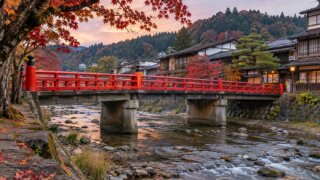







If you arrive in Takayama with daylight left but too little time for a full day in the old town, take the long way to dinner. Start at JR Takayama Station, cross the red Nakabashi Bridge and follow the wooden shopfronts of Sanmachi north. A second bridge brings you back across the Miyagawa River, within a few turns of the small restaurants at Dekonaru Yokocho.
Allow about 60 to 90 minutes for this evening walk before dinner. That includes time to stop on the riverbank and look closely at the buildings. If you want to browse inside the shops, leave earlier in the afternoon. If you arrive hungry after dark, the food alley is roughly a nine-minute walk directly from the station.
If you book through the Wabunka or Klook links in this guide, JATRABRIDGE may earn a commission.
- Nakabashi Bridge — the red road bridge beside Takayama Jinya.
- Kamisannomachi — the old merchant street on the east side of the river.
- Kajibashi Bridge — your crossing back to the west bank.
- Dekonaru Yokocho — the dinner alley at 24 Asahimachi.
Contents
From Takayama Station to the red Nakabashi Bridge
Leave the station by the east exit, marked Norikura, and set Takayama Jinya as your first map destination. The official local walking guide allows about 15 minutes from the station to the plaza in front of this former government office. From there the bridge is about a minute away. Download the city’s English walking map.
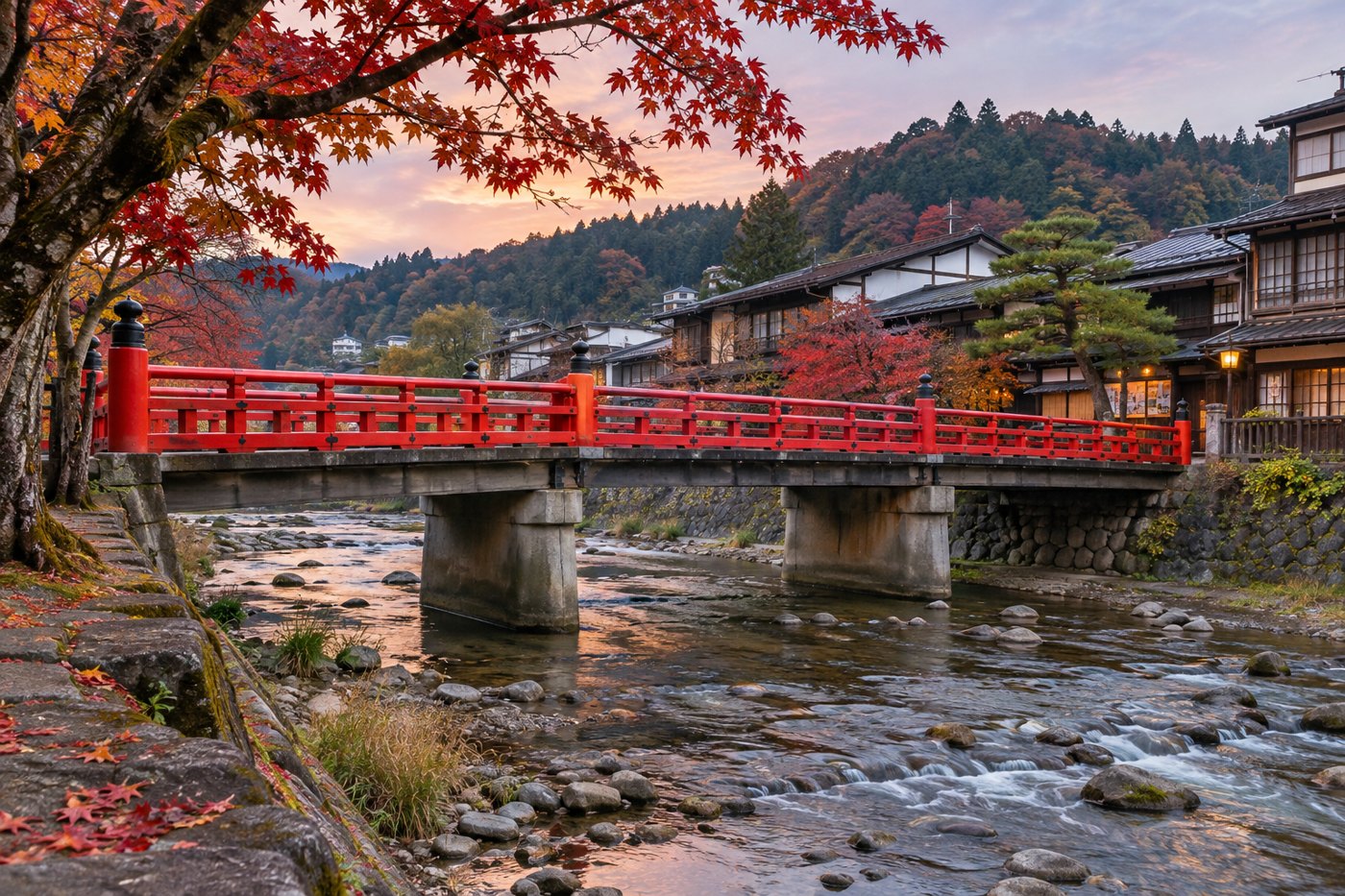
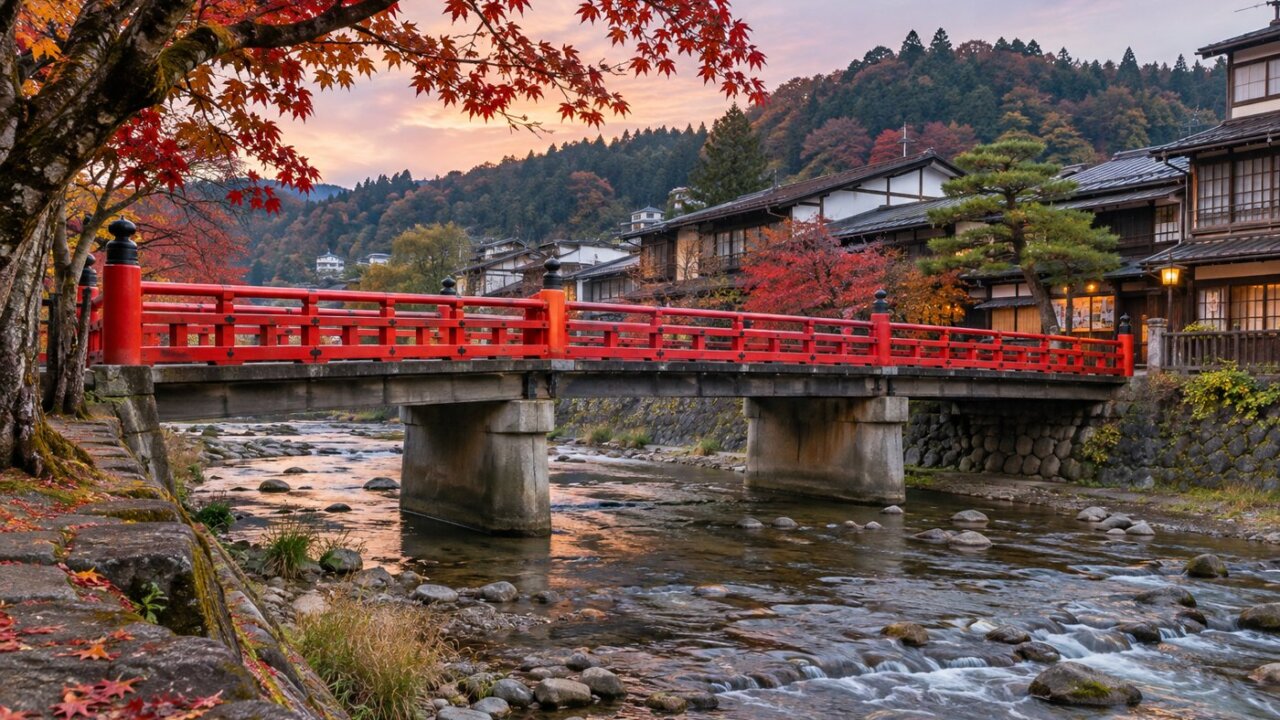
Pause on the bank before you cross. From the bridge itself you can see the water between the railings, but from the side you can fit the red span and the river in the same frame. For a view of the whole bridge, the tourism office suggests looking back from Ikadabashi, downstream. That makes a worthwhile detour if the light is good. If dusk is already falling, save your remaining daylight for Sanmachi. Nakabashi carries traffic, so keep your group on the pedestrian walkway as you cross.
If you would like a guide for this part of the evening, Klook’s 40-minute night walk takes in Takayama Jinya and the surrounding streets. Check the start time against your dinner plans. To see prices in US dollars, select USD in the booking site’s currency menu.
Walk north through the old merchant streets of Sanmachi
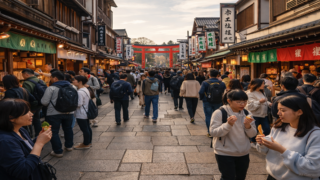
Cross Nakabashi to the east bank and look to your left for the entrance to Kamisannomachi. Turn north along the narrow street. The change from the open river to a close row of timber buildings is immediate. Look down at the edge of the road as well as up at the shop signs. Narrow water channels run alongside the wooden fronts.
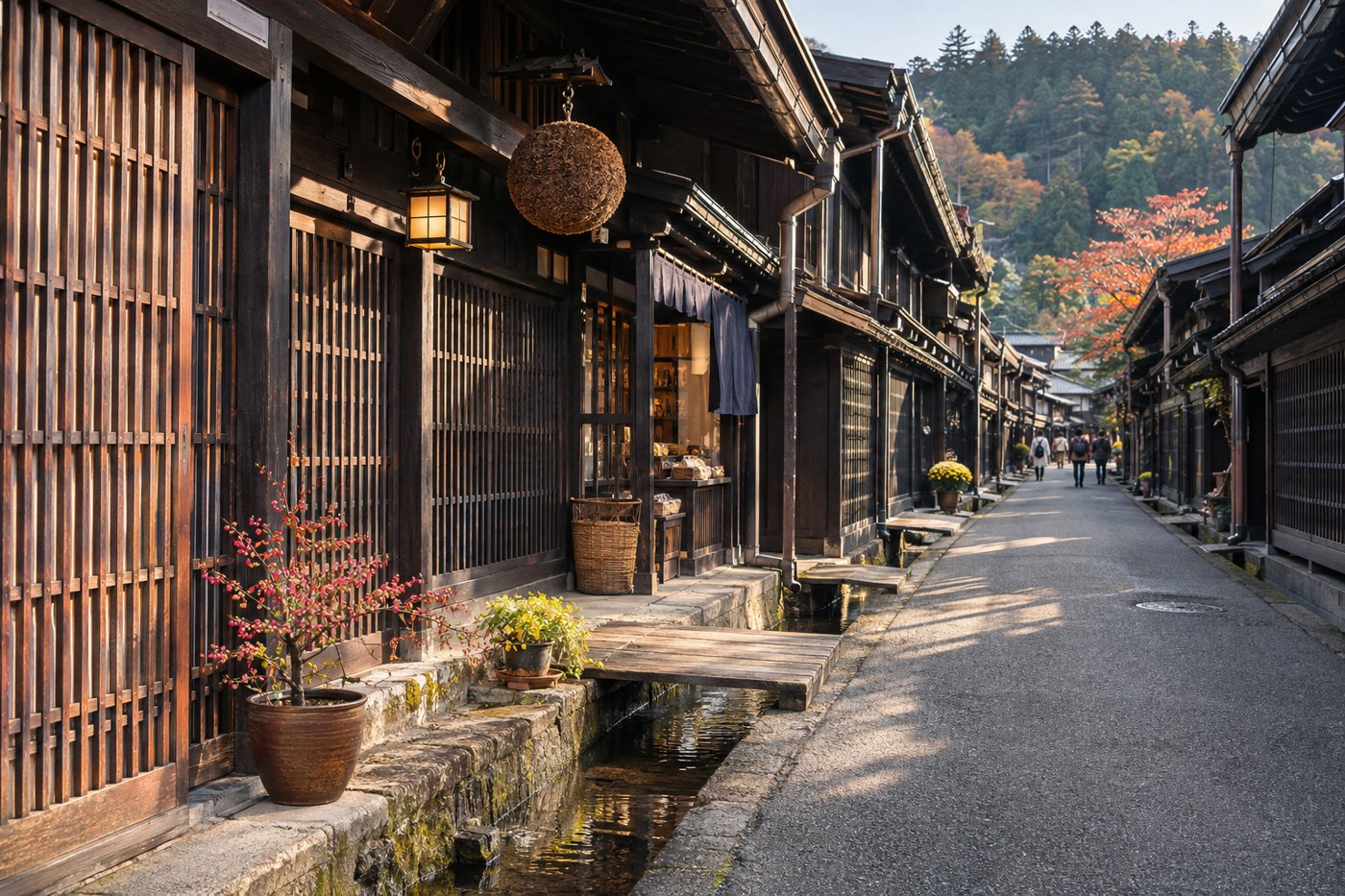
Look at a single frontage from the pavement. A projecting eave shelters the entrance, while wooden latticework breaks up the light at eye level. Farther along you may see a round ball of cedar sprigs under an eave. It is called a sugidama, a traditional sign associated with sake brewing. A few details like these are still visible after a shop has closed for the day.
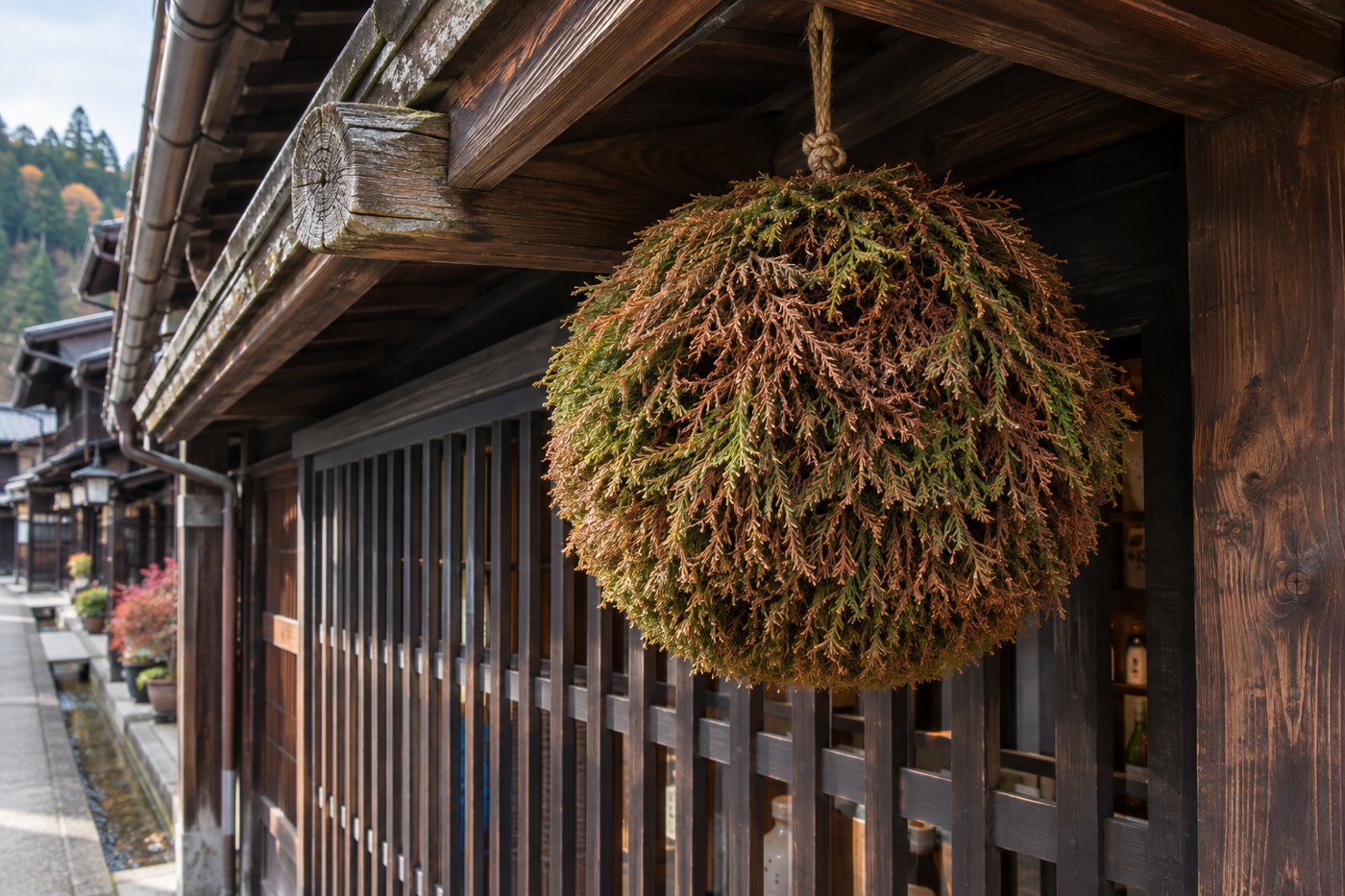
If the cedar balls catch your eye, set aside time the next day for Hida Furukawa. On Wabunka’s private tour of Watanabe Sake Brewery, you can see how the sake is made and taste it with local side dishes. Allow 90 minutes for the visit, plus travel time from Takayama. Wabunka’s currency menu also offers USD.
If shopping or a sake purchase is part of your plan, put that stop first and check the individual shop’s closing time. If you find the doors shut, carry on north for the streetscape and plan your shopping for tomorrow. For a longer visit, our full-day itinerary includes the town’s daytime food stops.

Turn back toward the river at Kajibashi Bridge
When you reach the wider road at the northern end of Kamisannomachi, turn left toward the river. You are now approaching Kajibashi from the east. The Miyagawa Morning Market stretches along this bank from Kajibashi toward Yayoibashi. Its stalls finish at noon, which makes the bridge a useful place to pin on your map if you want to come back for breakfast. Check the city’s morning market guide.
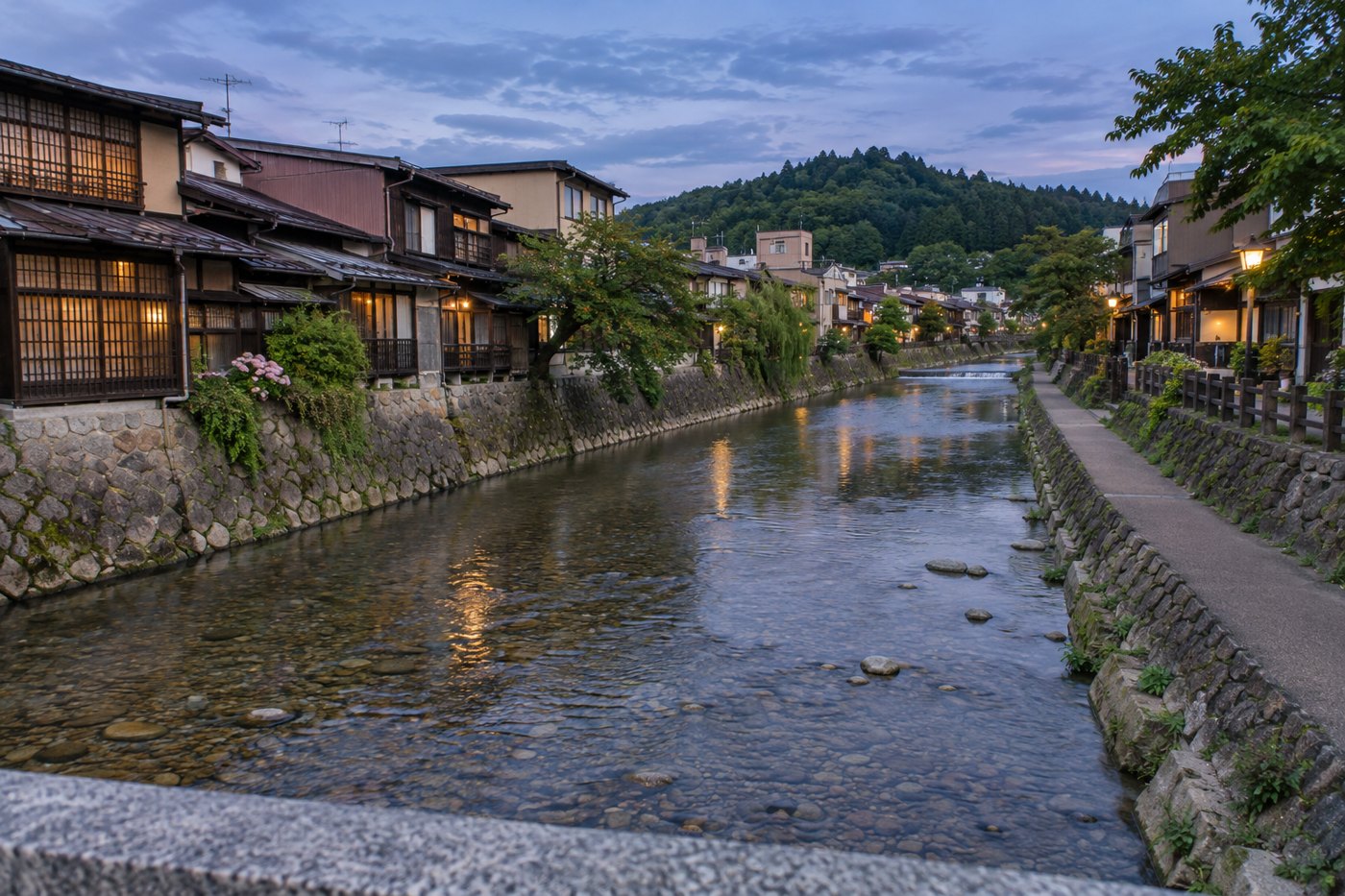
At this point you can judge dinner by the light and your appetite. If you have time before your chosen restaurant opens, take a short stroll along the east bank and retrace your steps to Kajibashi. If everyone is ready to eat, cross straight over. Keep the river behind you as you approach the Kajibashi intersection on the west side.
Find dinner at Dekonaru Yokocho
From the Kajibashi intersection, turn north. After about 70 metres, turn west at the T-junction. Walk another 50 metres and look on the north side of the street for the alley entrance. Save the address in advance if you are navigating by phone. Find the address and station access in Japan’s official travel guide.
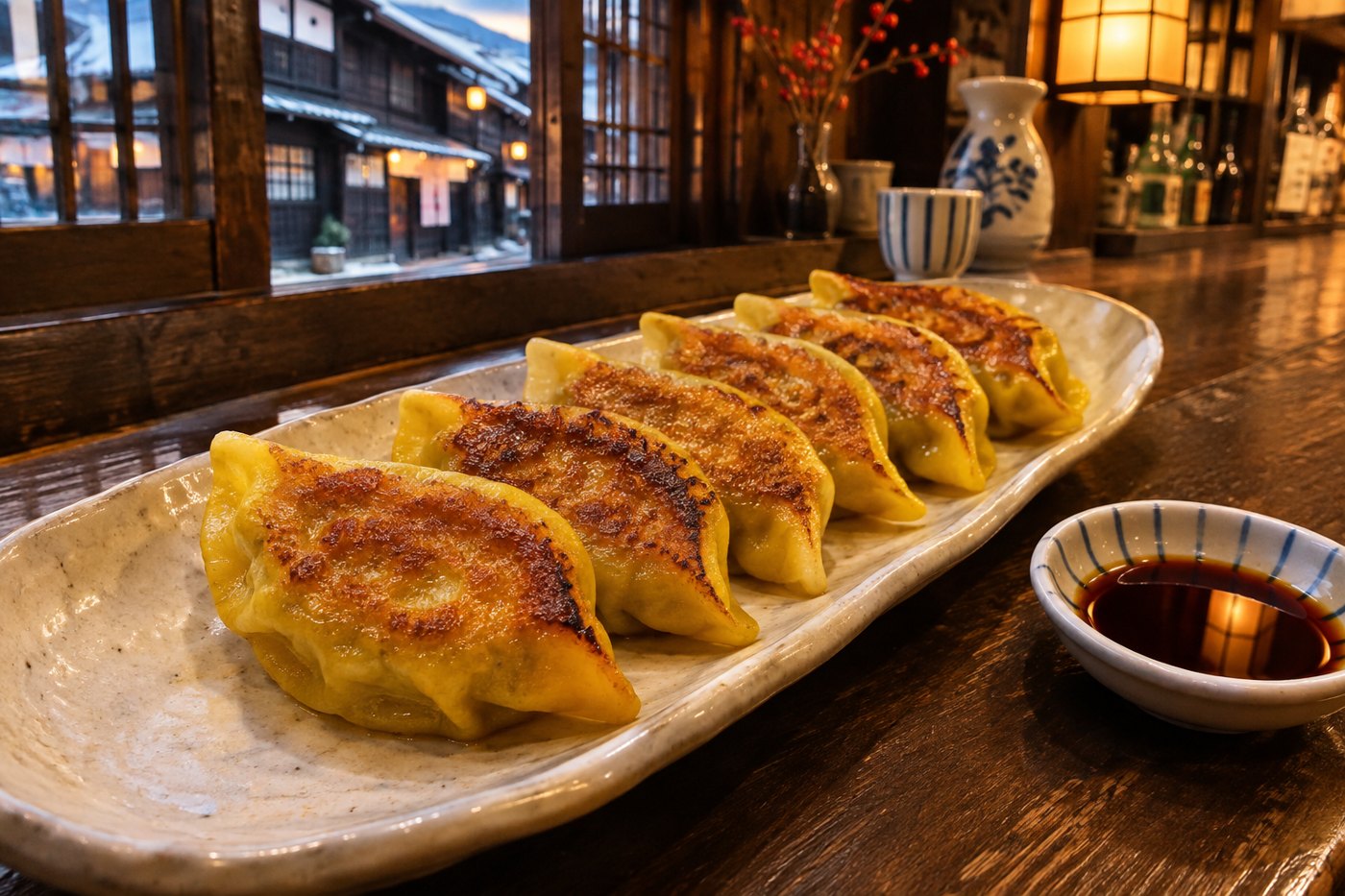
The restaurants set their own hours, so your arrival time matters. For example, the alley lists the yakiniku restaurant Keburiya from 5 p.m., with a regular Wednesday closure. Hida Takayama Gyoza Sohonzan lists a 6 p.m. opening and can close when its dumplings sell out. If one of those meals is the reason you came, check the individual listing before setting out. Our guide to the alley covers five places to eat and what to order at each.

Check your departure before you sit down and work backwards from the station. The alley gives nine minutes for the direct station walk. Add time to finish your meal, pay, find the platform and pick up any luggage. On a tight connection, go straight to the alley and save the two bridges for a morning when you can linger.
The route illustrations are AI-generated.