






Gero Onsen sits on the Takayama Line between Nagoya and Takayama, which makes it one of the easiest hot spring towns in Japan to visit without booking a room. Most of its baths belong to inns, though, and the ones a day visitor can use keep short hours. What matters is which bath to aim for, what time you can get in, and which day of the week it is.
In short: three public bathhouses admit anyone for 470 to 800 yen, seven foot baths in the town are free, and the famous riverside pool called Funsenchi is no longer a place you can bathe. If you want an inn bath instead, the 2,500 yen Yumeguri pass is worth it only when its timing fits your train.
- Three public baths: Shirasagi-no-yu 470 yen, Sachi-no-yu 470 yen, Kuagarden open-air bath 800 yen
- Closing days: Wednesday, Tuesday and Thursday respectively, so one of the three is always shut
- Free foot baths: seven in the town centre, two more inside paid attractions
- Funsenchi: free, open all year, foot bath only since December 2021
- Walk from Gero Station: 3 to 10 minutes to all of the above
- Yumeguri pass: 2,500 yen for three inn baths, valid six months
Contents
Funsenchi is a foot bath now, not a bath
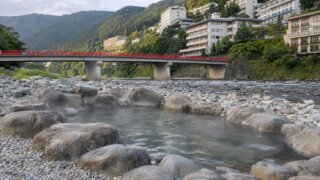
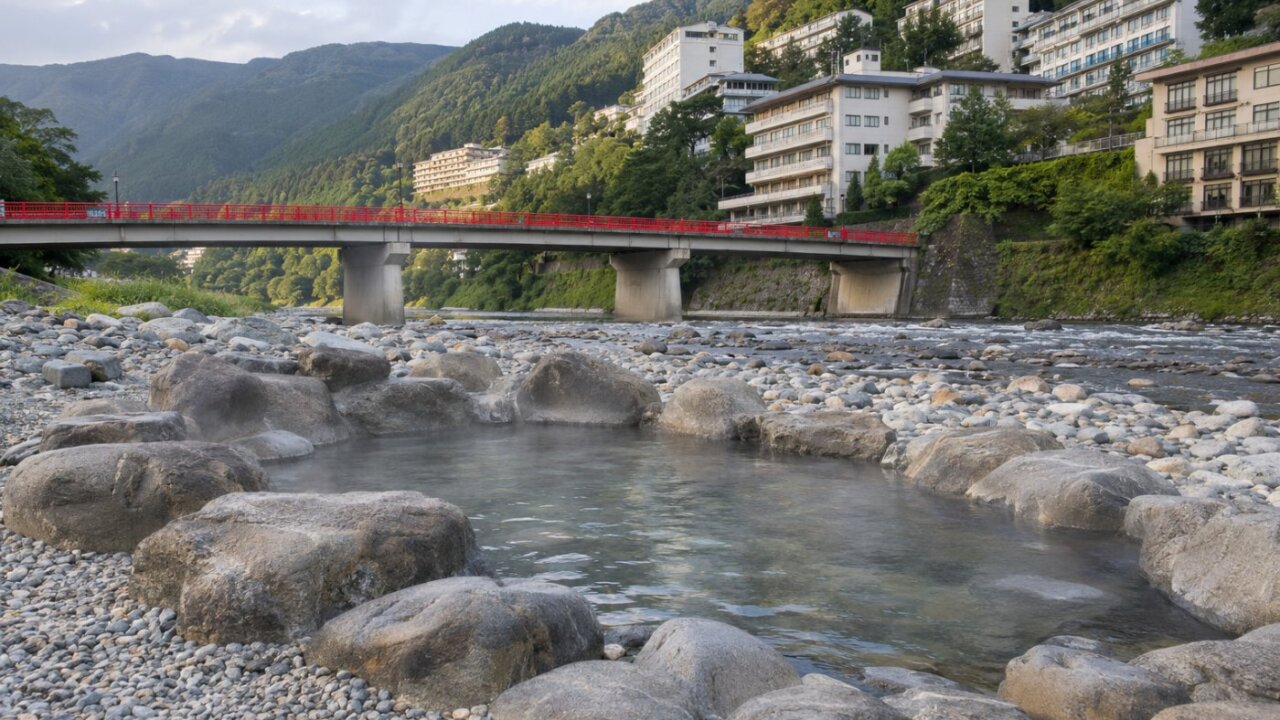
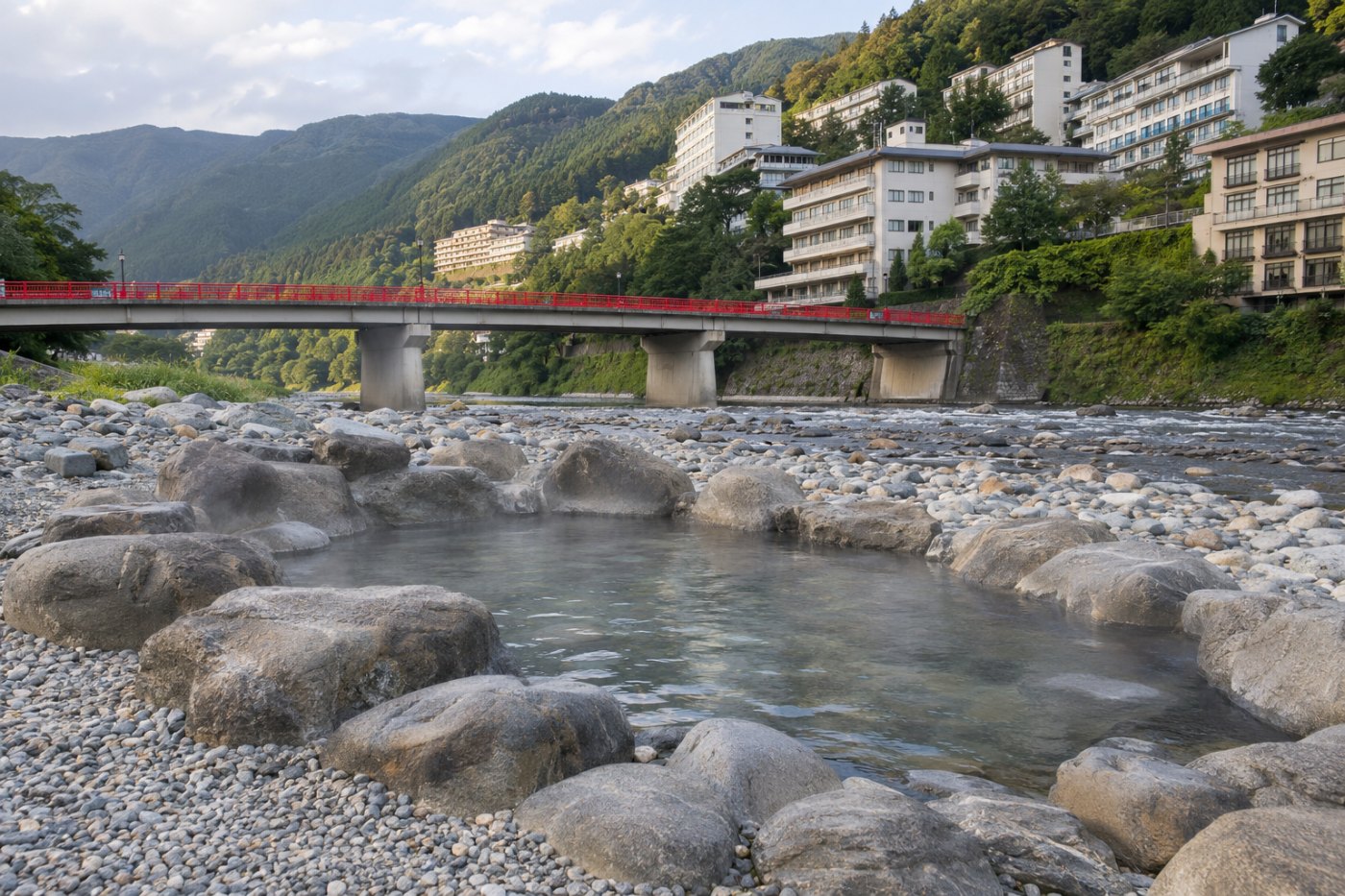
The photograph that sells Gero Onsen is a stone pool in the open riverbed below Gero Ohashi bridge, with no walls and no roof. It is still there, still free and still fed by the town’s spring. What has changed is what you may do in it: Gifu Prefecture’s official tourism site states that since December 1, 2021, Funsenchi may be used only as a foot bath, and the tourism association’s own page says bathing is prohibited.
Older guidebooks, blog posts and even some official itineraries still describe getting in wearing a swimsuit. Walk down for the view and the river sound, roll up your trousers and sit on the edge, then plan your real bath somewhere else. Funsenchi is three minutes on foot from the station, so it works well as a first stop while you decide.
The three public baths, and the day each one closes
Gero has three soto-yu, public bathhouses anyone can walk into with a towel and the entrance fee. Between them they cover the whole day, but each closes on a different weekday.
- Kuagarden open-air bath — choose this one for an outdoor soak beside the Hida River. Six styles of bathing, including a water jet bath, three-temperature pools, a steam box and a bubble bath. Open 8:00 to 20:45, last entry 20:00, so it is the only option early in the morning. Closed Thursdays, or the next day when the Thursday is a holiday. Adults 800 yen, children 400 and 200 yen. About 10 minutes from the station.
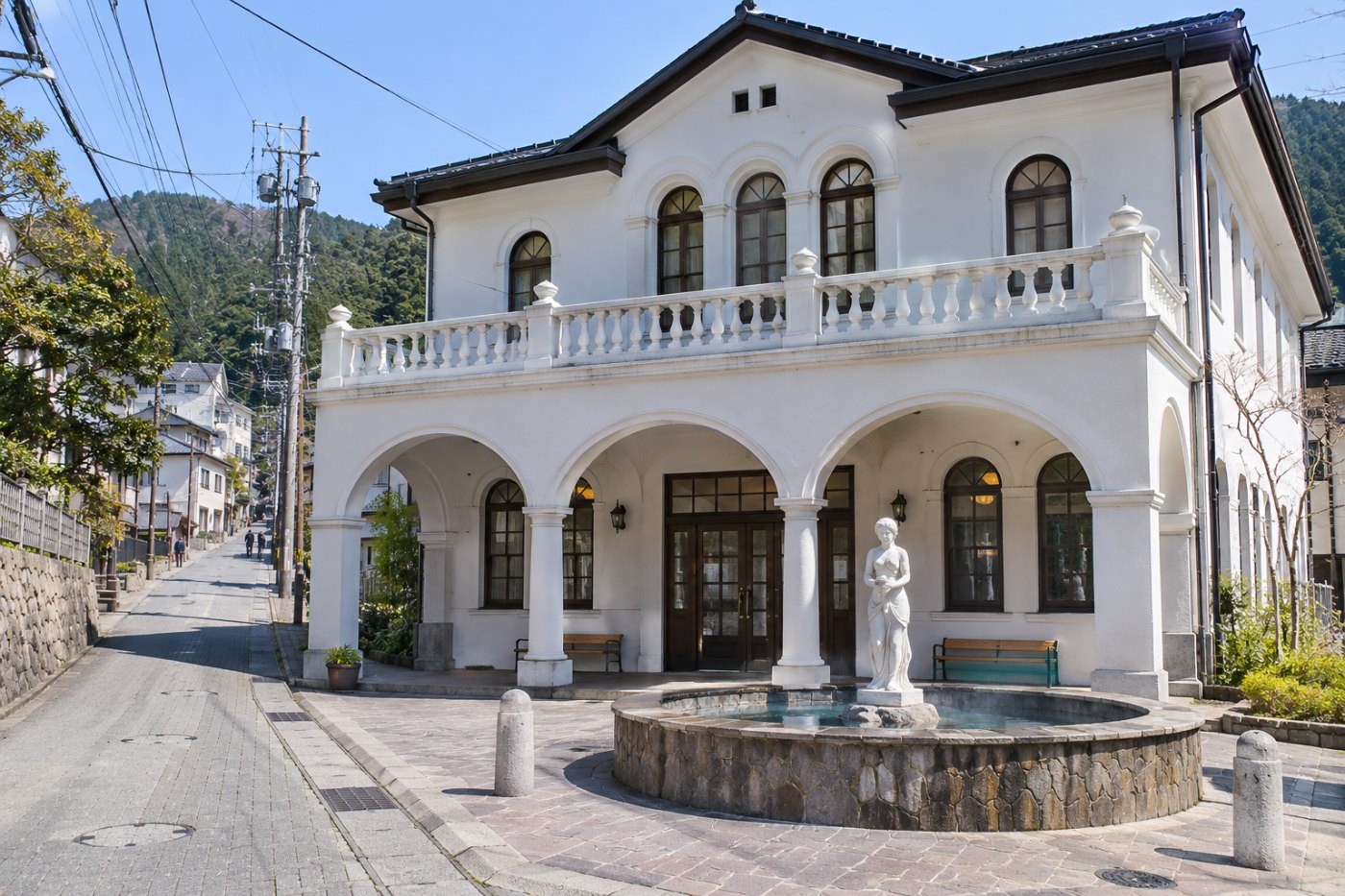
- Shirasagi-no-yu — the white, vaguely Romanesque bathhouse locals have used for decades, with a cypress indoor bath and a rest area. Open 10:00 to 20:45, last entry 20:00. Closed Wednesdays, or Friday instead when the Wednesday is a public holiday. Adults 470 yen, elementary school children 180 yen, younger children 100 yen. About 7 minutes from the station.
- Sachi-no-yu — a public bath attached to an inn of the same name, with seven kinds of bath including an open-air one. Open 12:00 to 21:00 on weekdays and from 11:00 at weekends and on holidays, last entry 20:30. Closed Tuesdays and the fourth Monday of the month. Adults 470 yen. Only 4 minutes from the station, with twenty free parking spaces. Its private family baths are currently suspended.
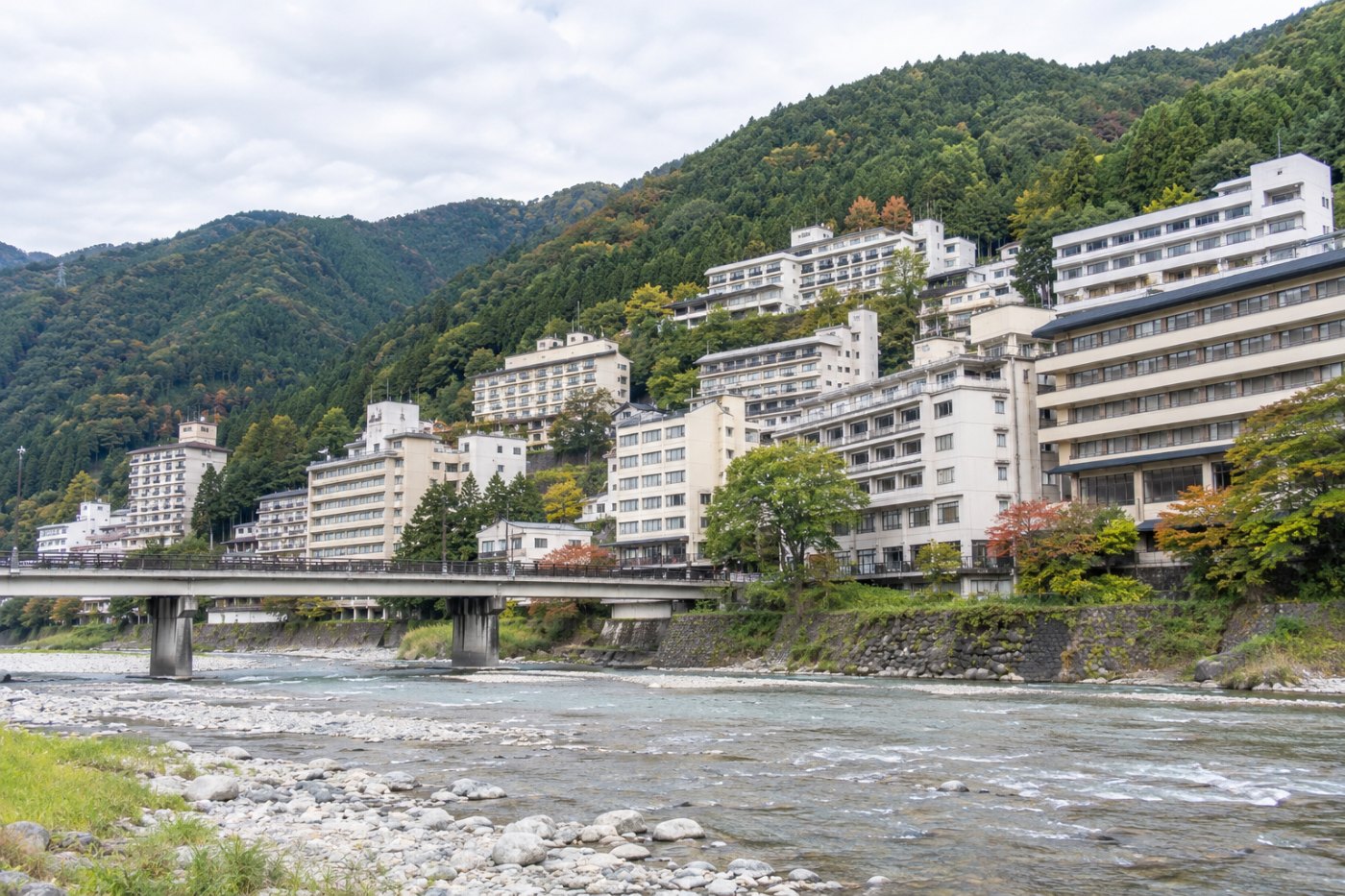
All three draw from the same source. Gero runs a central hot spring management system, so a 470 yen public bath uses the same alkaline simple spring as an expensive inn. The water rises at up to 84°C, is delivered at about 55°C and has a pH of around 9.2, which is why the town calls itself a beauty bath.
The Yumeguri pass: when 2,500 yen makes sense
The Yumeguri Tegata is a wooden token sold as a set with a towel and a drawstring bag for 2,500 yen including tax. It buys three day-use baths at inns belonging to the Gero Onsen Ryokan Cooperative and stays valid for six months, so an unused third bath keeps until a later trip. It is sold at member inns, souvenir shops, three convenience stores in town and the tourist information centre.
The reason to buy it is access to inn baths with river views that are otherwise reserved for guests. The reason to hesitate is the timetable. On the cooperative’s current list, most member inns take day bathers in a window of one to two hours — several only between 12:00 and 14:00, some only in the evening, several on weekdays only, and a number cannot take anyone arriving by car. Two of the public baths above also accept the pass, which shows how the maths works: three baths for 2,500 yen is about 833 yen each, more than the 470 yen you would hand over at the door.
Check today’s bathing status: The cooperative publishes a live page showing which inns are accepting pass holders right now. Crowding can close a window early even within the listed hours.
Count your hours in town: If your train leaves before 14:00, assume you can use one inn bath, not three. The public baths and the foot baths have far longer hours.
Children: Under-fours bathe free. Ages four to twelve need a sticker, but an accompanying adult may peel two stickers from one pass at the same time. From junior high school age the adult rules apply.
Ask about towels and parking: The pass includes one towel. Parking rules are set inn by inn, and several member inns have none.
Free foot baths, and one that has closed
If your stop in Gero is an hour between trains, the foot baths are the better plan. The cooperative lists nine, seven of them free and in the middle of town.
- Sagi-no-ashiyu — the oldest, a wooden tub with a bench and a roof beside the central car park. Open 24 hours, never closed. It stands diagonally opposite the frog shrine.
- Venus foot bath — a circular tub with a statue in the middle, at the entrance to Shirasagi-no-yu, 10:00 to 21:00. Closed when the bathhouse is.
- Yuamiya foot bath — at the foot of Shirasagi bridge, in front of a café selling soft serve topped with a hot spring egg. Open 9:00 to 18:30, with some variation.
- Miyabi foot bath — beside the entrance of the Gero Royal Hotel Miyabitei, open to non-guests 7:00 to 22:00.
- Sarubobo golden foot bath — inside a small shrine next to Shirasagi Yokocho, 9:00 to 21:00.
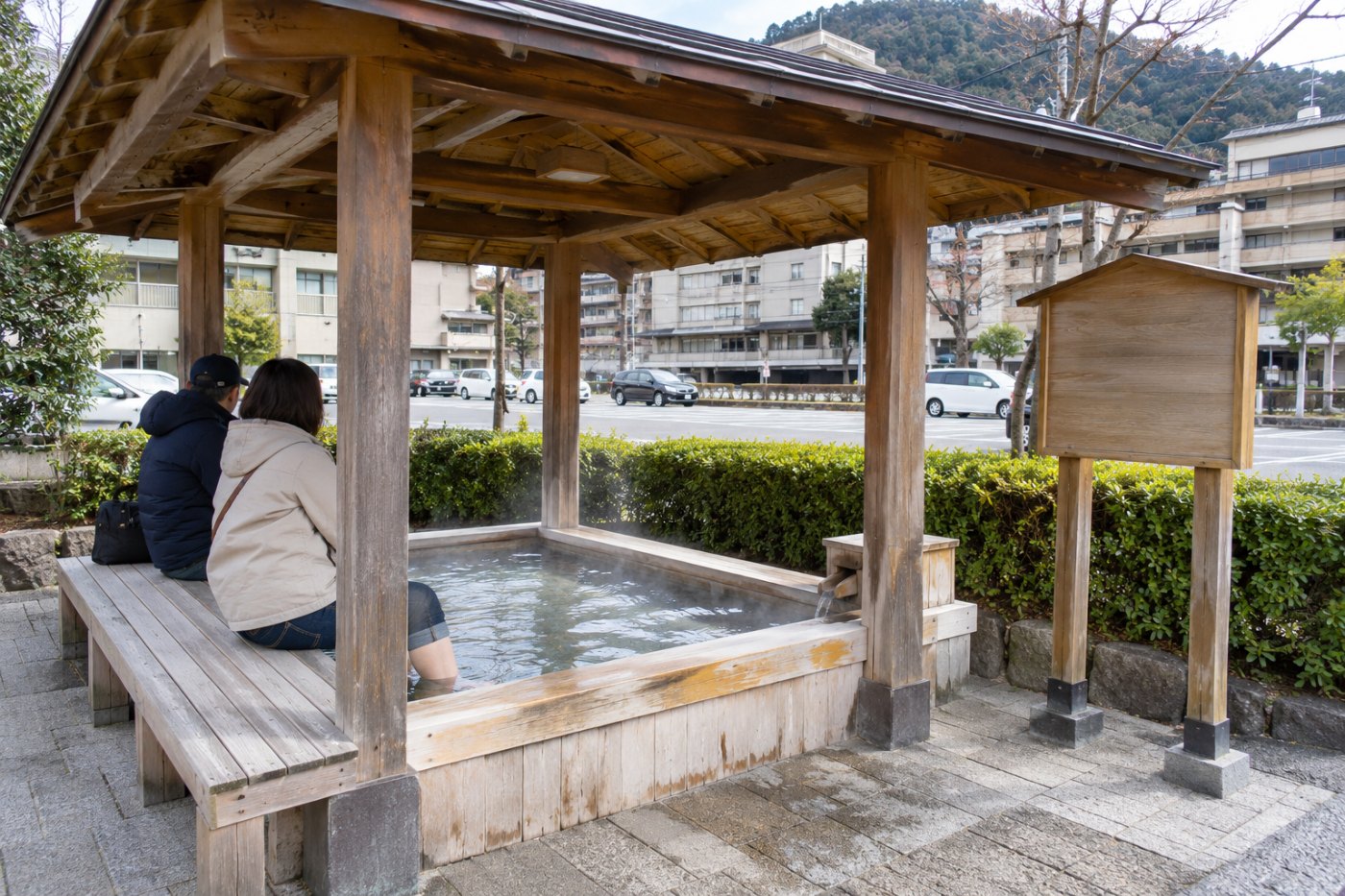
Two more sit inside places you pay to enter: Gassho Village, 8:30 to 16:40 behind an 800 yen admission, and the Gero Hot Spring Museum, 9:00 to 17:00 behind a 400 yen admission and closed on Thursdays. One foot bath, Gerumano beside the inn Suihoen, is listed as unavailable for the time being, so do not build a walk around it.
Our frog guide covers the shrine, the manhole covers and the pudding, all of which are on the same short walk as these foot baths.

Getting there, and the ticket trap at Gero Station
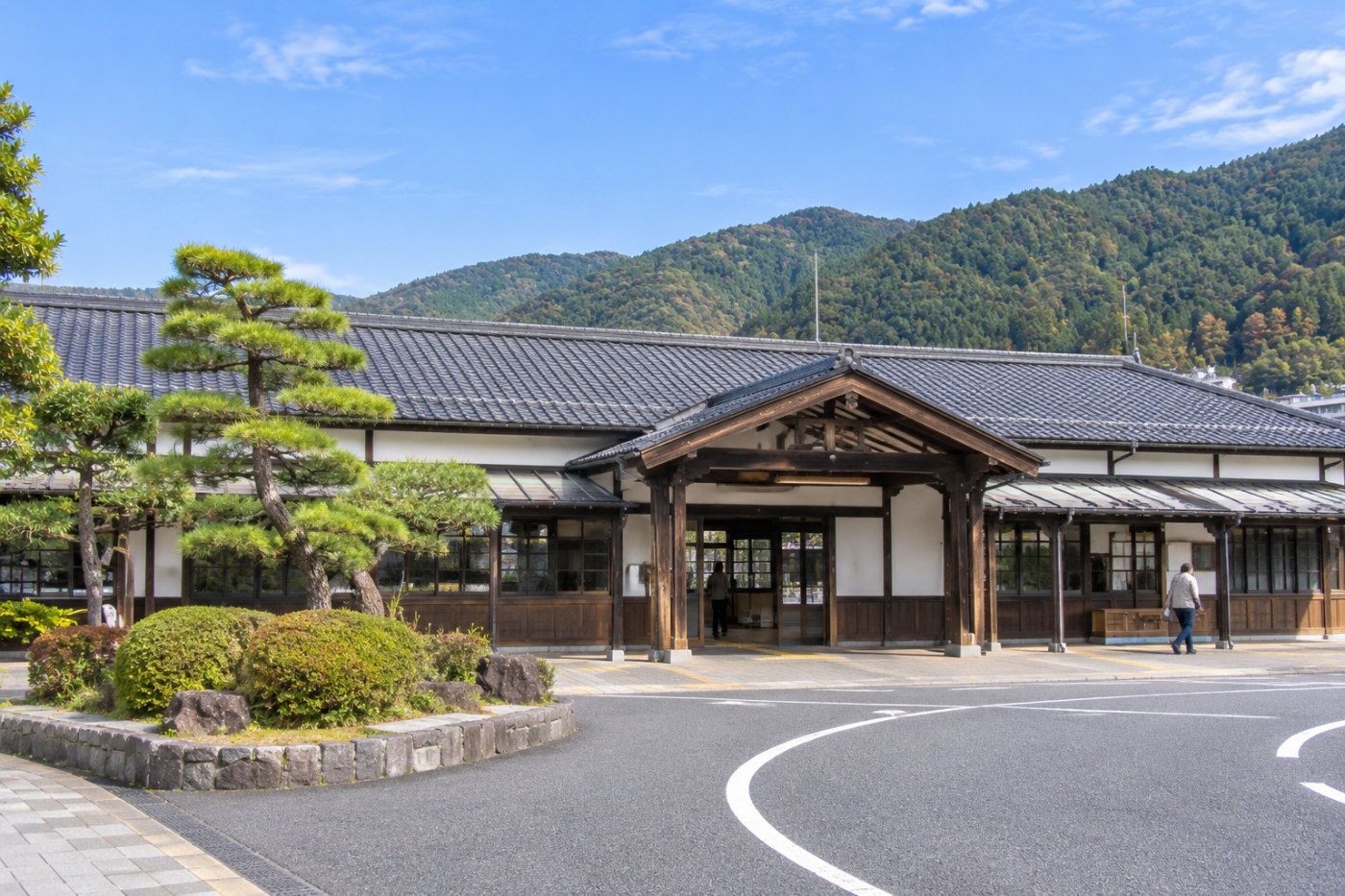
Gero is a stop on the Limited Express Hida. From Nagoya the tourism association gives about 1 hour 30 minutes, and from Osaka about 3 hours 30 minutes. Coming the other way, JR Central puts Takayama to Gero at roughly 45 to 60 minutes, which is what makes a bath in Gero a realistic detour on a Takayama trip. There is also a highway bus from Shinjuku, about 5 hours 40 minutes.
One practical warning the station gives: Gero Station does not accept TOICA or other transport IC cards. Buy a paper ticket for your whole journey before you travel, in both directions. Reserved seats on the Hida sell out in autumn foliage season, so book those too.
Buying ahead also gets round the ticket machine. Nohi Bus sells a two-day pass for unlimited rides between Takayama Nohi Bus Center and Gero Station through online travel sites. And if you would rather have the whole day arranged, there is a guided day tour from Takayama that takes in the riverside walk, Gassho Village, the hot spring museum, Onsenji temple and an onsen bath, with the timings worked out for you. We may earn a commission if you book through this link.
If you would rather sit down to a meal with your bath, the cooperative lists inns offering a lunch-and-bath plan, from about 3,510 to 13,200 yen. These are booked by telephone, most need two or more people, and some close bookings a week ahead, so they suit a planned trip rather than a spontaneous stop. If you do decide to stay the night, note that Gero has charged a lodging tax of 100 or 200 yen per person per night since October 2025.
On a day trip, our Takayama evening walk pairs well with a morning bath in Gero on the same line.
And if Gero is one stop on a wider Gifu trip, our prefecture guide puts it next to Shirakawa-go, Takayama and the rest.

Hours, prices and closing days were checked on the Gero Onsen Tourist Association, the Gero Onsen Ryokan Cooperative and the Gifu Prefecture official tourism sites on November 18, 2026.