





Kinkakuji, the Golden Pavilion, is the one temple in Kyoto almost every first-time visitor puts on the list, and it is also one of the least convenient to reach. It sits in the northwest of the city with no train station nearby, so the questions that decide your morning are practical ones: which bus to take, how long the visit takes, and what you can and cannot do once you are inside.
In short: the temple opens at 9:00 every day of the year, admission is 500 yen, the garden is a one-way loop that takes about an hour, and the smoothest way there from Kyoto Station is not the direct bus but the subway to Kitaoji and a short bus ride from there.
- Hours: 9:00 to 17:00, open every day of the year
- Admission: 500 yen for adults (high school age and over), 300 yen for elementary and junior high school students
- Payment: cash, or contactless card and IC card at the admission window
- Nearest bus stop: Kinkakuji-michi, served by Kyoto City Bus routes 12, 59, 102, 204, 205 and M1
- From Kyoto Station: bus 205 direct, or subway to Kitaoji (260 yen) plus bus 204 or 205 (230 yen)
- Time inside: about an hour at an unhurried pace
- Official name: Rokuonji, a sub-temple of Shokokuji
Contents
Getting there from Kyoto Station
Kyoto City’s official tourism site lists three standard routes from Kyoto Station, all ending at the Kinkakuji-michi bus stop on Nishioji-dori. From the stop, cross at the crosswalk toward the Yojiya shop, turn left at the sign for the temple and follow the stone wall to the first gate.
- Bus 205, direct — from the bus terminal in front of the station. It is the simplest, but it is the route everyone takes, and it is the longest ride of the three. The same official page warns that buses from Kyoto Station get crowded, are slowed by traffic and often arrive late or bunched together.
- Subway to Kitaoji, then bus 204 or 205 — the route the tourism site recommends. Take the Karasuma Line toward Kokusaikaikan seven stops to Kitaoji (about 15 minutes, 260 yen), follow the signs to Kitaoji Bus Terminal, and board bus 205 at stop E or bus 204 at stop G (about 15 minutes, 230 yen). Bus 206 also stops at G and does not go to Kinkakuji, so read the number.
- JR Sagano Line to Emmachi, then bus 204 or 205 — useful if you are already on the JR side or coming from Arashiyama.
City buses charge a flat 230 yen within the central zone, and the subway is priced by distance. Both take transport IC cards such as ICOCA, Suica and PASMO, and the city also sells a KANSAI ONE PASS card to visitors on a short-term stay. The Subway & Bus 1-Day Pass costs 1,100 yen. For a simple return trip via Kitaoji you would spend 980 yen, so the pass pays off only once you add another ride, such as continuing to Ryoanji or Kitano Tenmangu.
Leaving Kinkakuji, the stop for buses back toward Kitaoji and Kyoto Station is across Nishioji-dori. If the queue is long, walking 10 or 15 minutes to the next temple or shrine before boarding usually gives you more routes to choose from.
If you would rather skip the buses altogether, there is a small-group half-day tour of Kinkakuji and Ninnaji that travels by car, includes admission to both temples and has an English-speaking guide, with morning and afternoon departures. We may earn a commission if you book through this link.
Kyoto City’s Transportation Bureau has announced that it will introduce separate city bus fares for residents and non-residents during fiscal 2027. Local news reports put the non-resident fare at about 360 yen, but the amount had not been finalised when we checked. Until the change takes effect, visitors pay the same 230 yen as everyone else.
Hours, tickets and how to pay
The gate is open from 9:00 to 17:00 every day, with no closing days. The temple notes that hours and fees can change during special exhibitions. Admission is 500 yen for adults, including high school students, and 300 yen for elementary and junior high school students. There is no discount for groups.
Since late September 2026 the admission window has also accepted cashless payment through a temple payment service called Omairi Pay. It works by tapping a card, with no app to install; the service lists Visa, Mastercard, JCB, American Express and Diners Club credit cards and transport IC cards among the methods it handles, though each temple chooses which ones to accept, so check the sign at the window. Charms and temple stamps (goshuin) are not covered, so keep some cash for those.
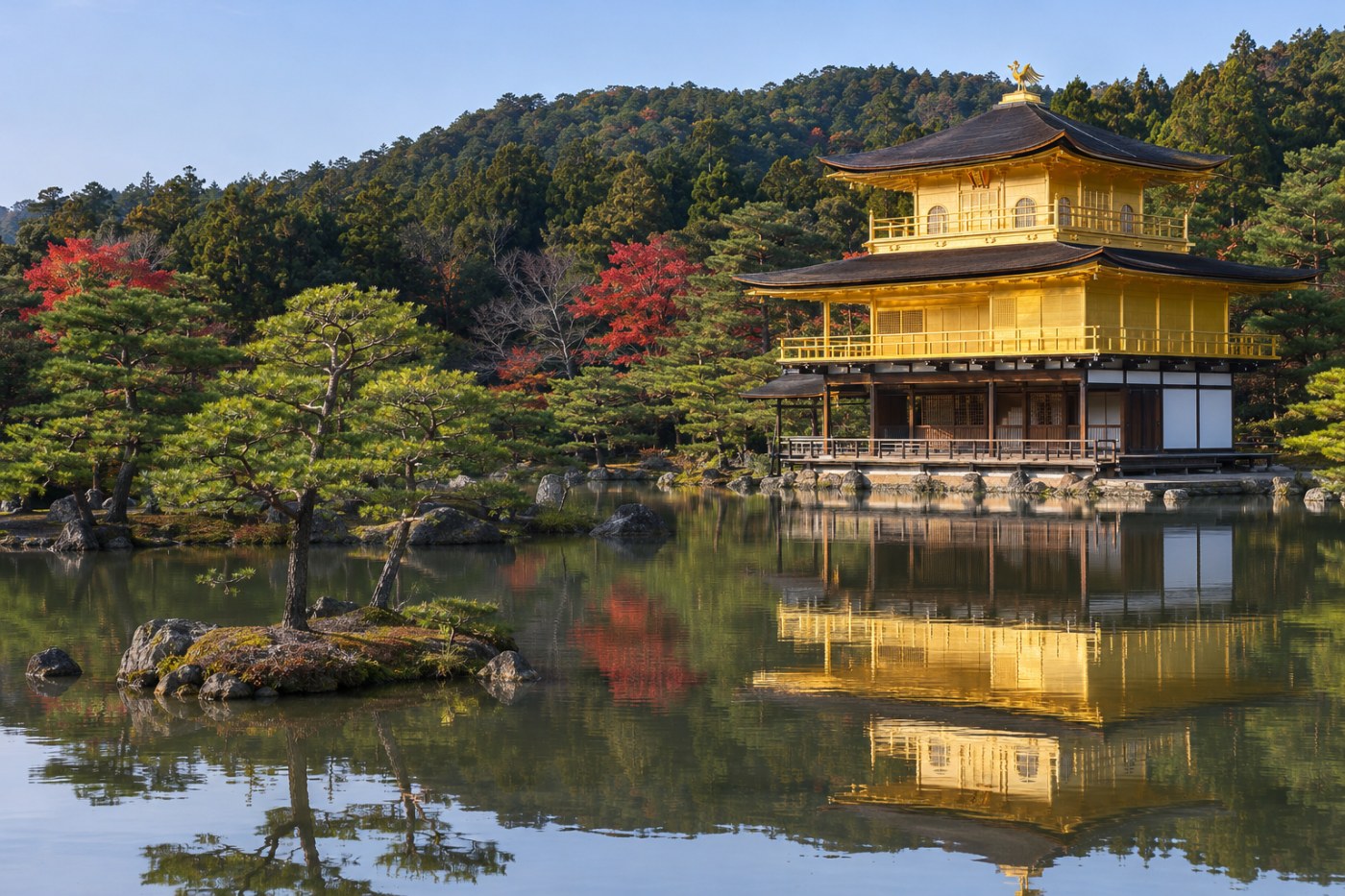
The one-way route through the garden
Once inside, the path runs in one direction only. Knowing the order helps, because the best view of the pavilion is the first one and you cannot walk back to it.
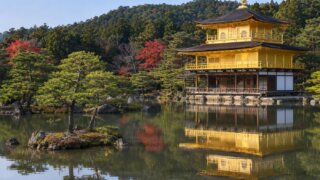
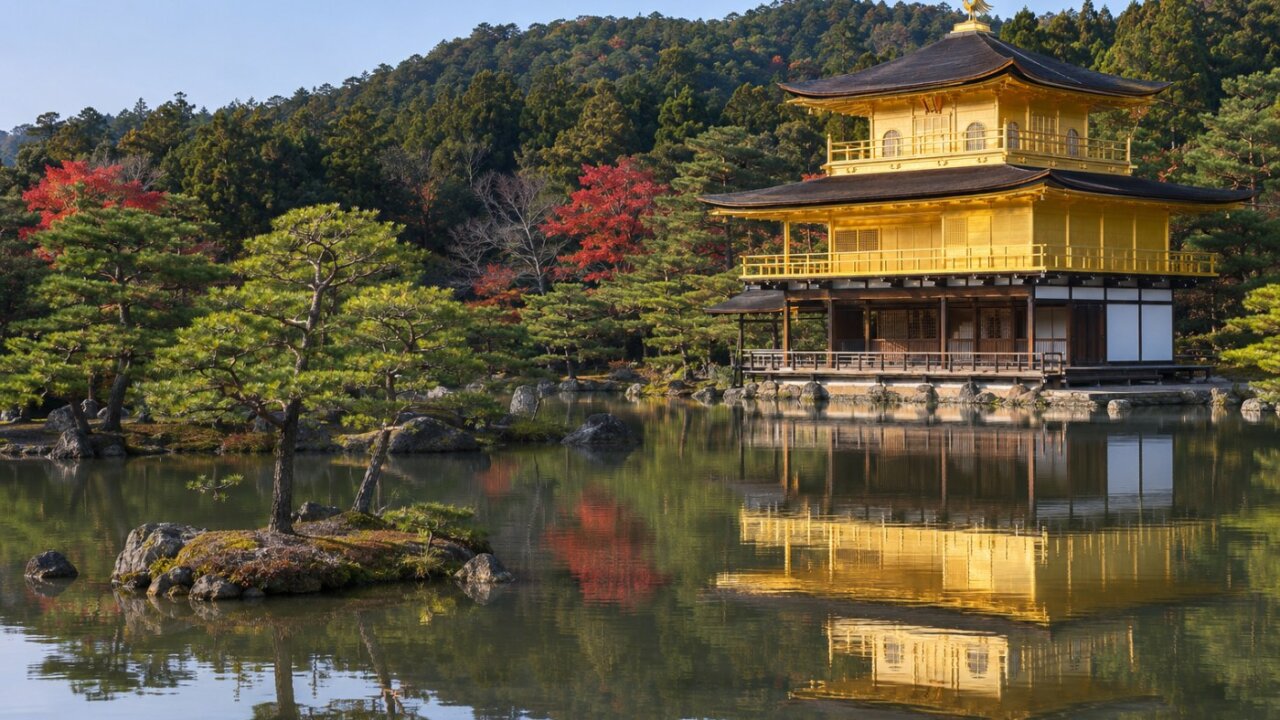
- Kyokochi pond. The classic view: the pavilion across the water, with islands and named rocks set in the pond. The top two floors are covered in gold leaf over lacquer, the roof is made of thin layered wooden shingles, and a phoenix stands on the peak. Each floor is built in a different style, from a palace-style ground floor to a Zen-style top floor. Take your photos here before moving on.
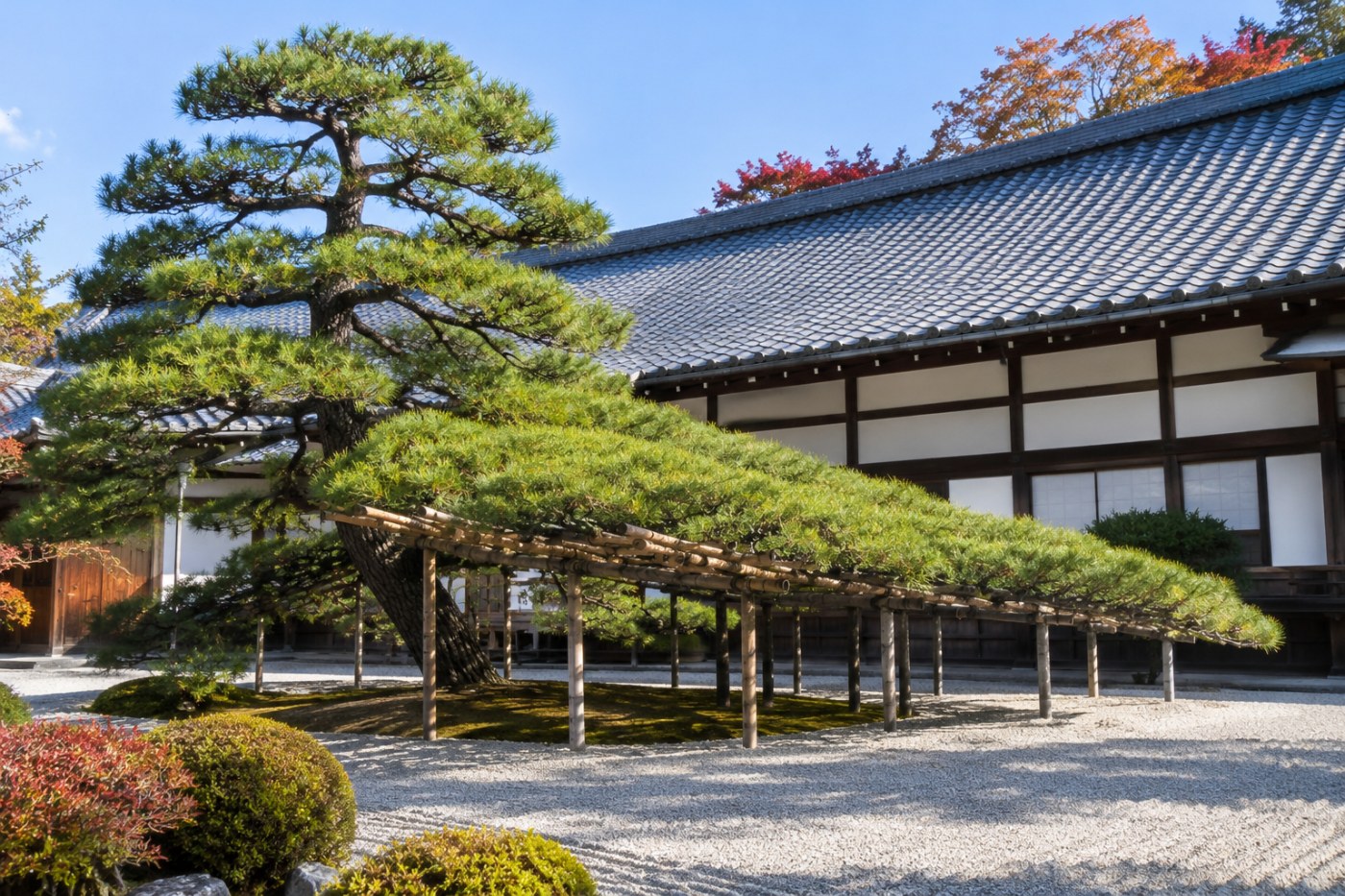
- Rikushu-no-matsu pine. Beside the abbot’s quarters, a pine trained into the shape of a boat.
- Behind the pavilion. Two small springs, Gingasen and Gankasui, said to have been used by the shogun Ashikaga Yoshimitsu for tea water and for washing his hands. From here the path climbs.
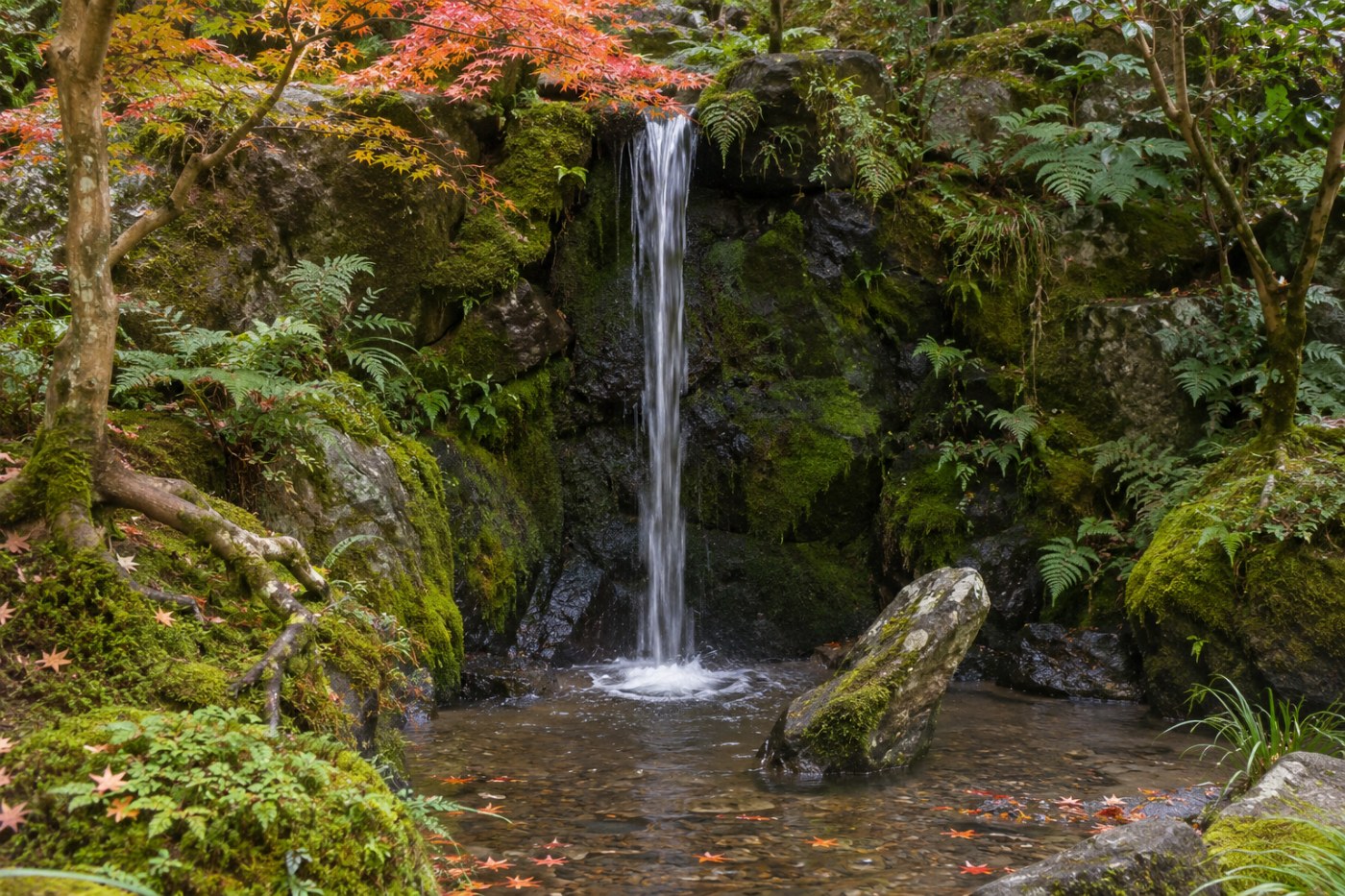
- Ryumon waterfall. A 2.3-metre single drop with a slanted stone at its base, the carp about to leap the falls and become a dragon. Next to it is a small stone bridge flanked by low bamboo fences in two different weaves, the original Kinkakuji fence.
- Anmintaku pond. A shaded pond said never to dry up, once used for rain prayers, with a small stone pagoda on its island.
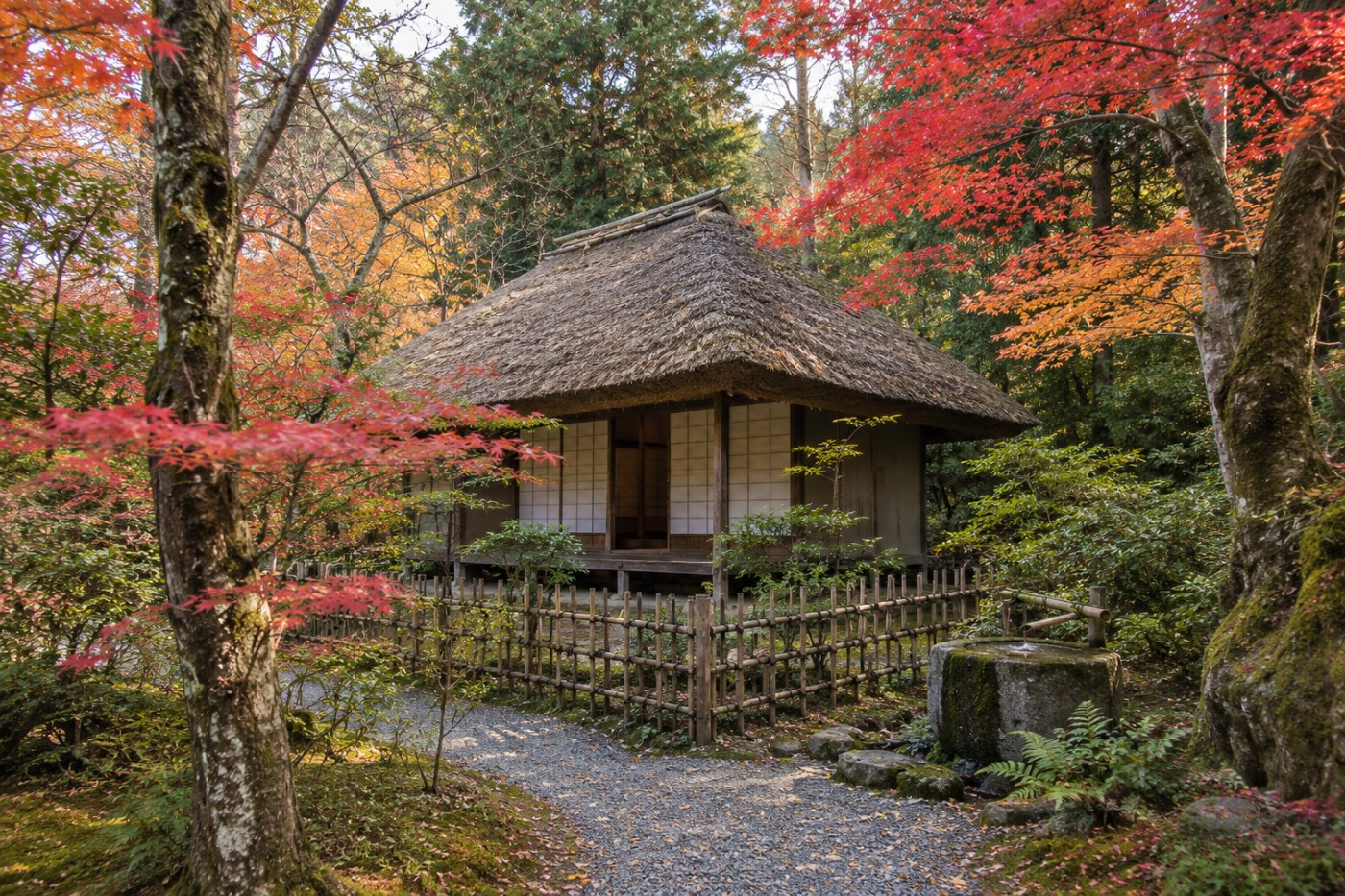
- Sekkatei teahouse. A thatched teahouse from the Edo period, built for the retired Emperor Gomizunoo and named for the way the pavilion looks in the evening sun.
- Fudo-do hall. The last building before the exit, enshrining a stone image of Fudo Myoo. Its doors open to the public only on February 3 and August 16.
The garden itself is a designated Special Historic Site and Special Place of Scenic Beauty, and it is about 600 years old. That shapes access: the temple says you can reach the side of the pavilion without major steps, but the path climbs stone stairs just past it. Wheelchair users, visitors with limited mobility and anyone with a pushchair are asked to turn back before the stairs and leave through the entrance. Wheelchairs can be borrowed on the day if one is free, and there is an accessible toilet.
Rules to know before you go
Photography: Snapshots with a small camera for personal use are allowed. The temple declines filming or photography meant for publication, which it says includes social media, as well as commercial shoots, group photos, video streaming and drones.
Luggage: There are no lockers and nowhere to leave bags. Use the coin lockers at Kyoto Station or another station before you set out.
Food: There is no place in the garden to eat a packed lunch.
Pets: Small dogs and cats only, and only inside a closed cage or carrier. Assistance dogs are welcome.
When to go
The temple has no closing day, so the choice is about the hour and the season. If you want the pond view with fewer people in front of you, aim to arrive close to the 9:00 opening, and remember that the bus from Kyoto Station is the slowest part of the trip. The temple publishes a live camera image of the pavilion every three minutes on its website, which is also the quickest way to check for snow on a winter morning.
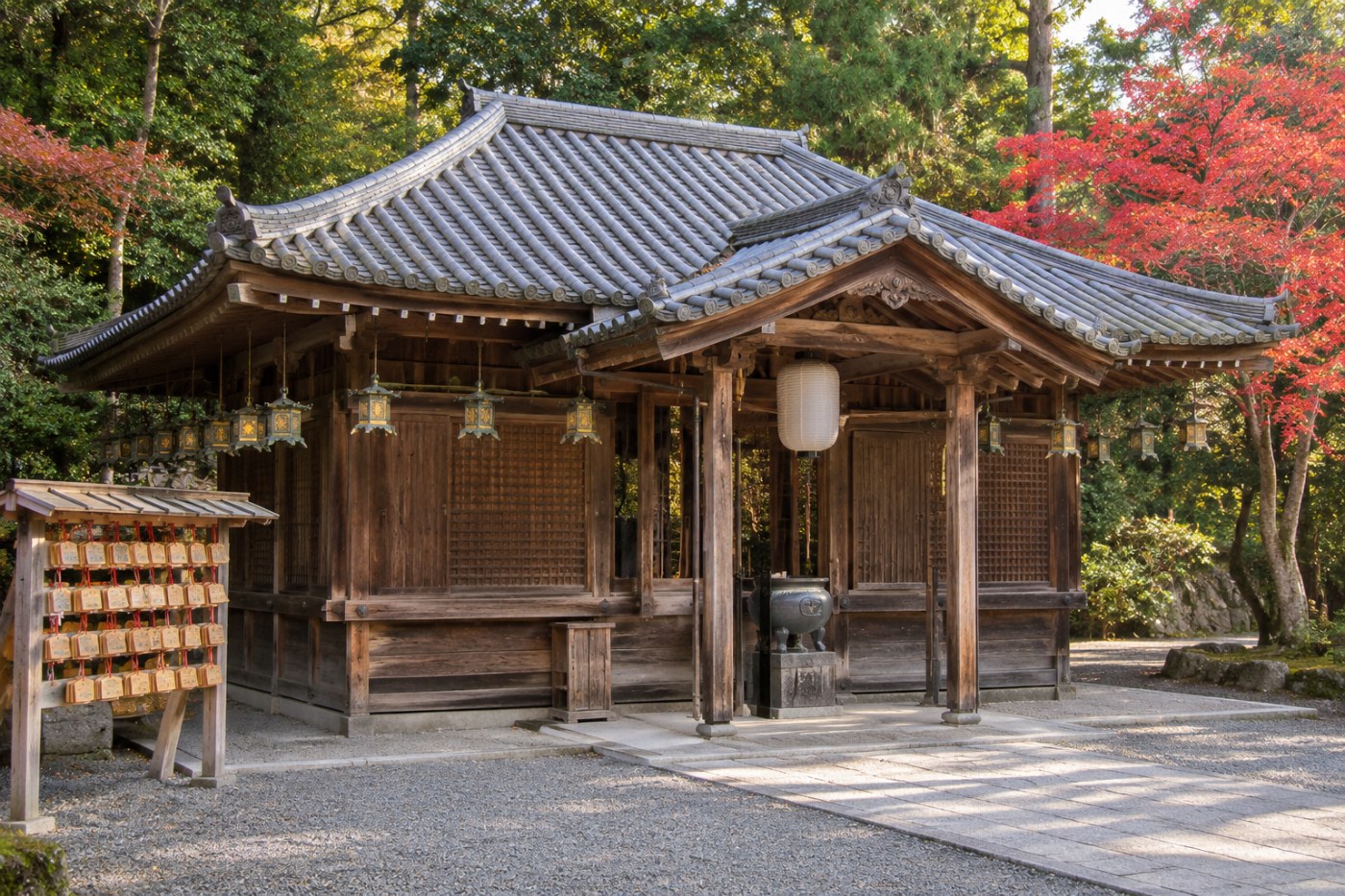
A few dates are worth knowing. On November 28, a fire ceremony is held at Fudo-do, and that day the temple stamp office writes the stamp for the stone Fudo image by hand while the pavilion stamp is given only as a pre-written slip. On February 3 and August 16, Fudo-do opens its doors. In late autumn the maples around the garden turn, and Kyoto’s official tourism site posts weekly leaf reports for the city.
Where to go after Kinkakuji
The pavilion is a short visit, so it is easy to continue somewhere close. Ryoanji and its rock garden are a 20-minute walk or a five-minute ride on bus 59, and Ninnaji is a couple of minutes further on the same route. Bus 204 or 205 takes you to Kitano Tenmangu in about five minutes. Our guide to ten places near Kinkakuji has walking times, bus routes and a three-hour plan.
If Ninnaji is your next stop and you want more than the public grounds, a private Ninnaji tour led by one of the temple’s monks enters the Kondo hall, which is normally closed, and ends with a tea ceremony in a private teahouse (about 150 minutes, English-speaking guide). We may earn a commission if you book through this link.

If Ryoanji is next, read up on its rock garden first; the fifteen stones make more sense when you know what to look for.

Hours, admission, payment and visitor rules were checked on Kinkakuji’s official website, bus and subway fares on the Kyoto City Bus & Subway Information Guide, and routes on Kyoto City’s official tourism site on November 20, 2026.