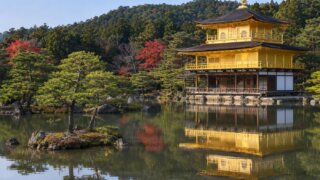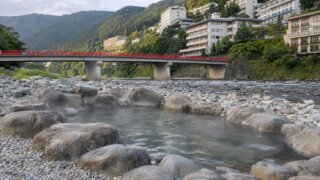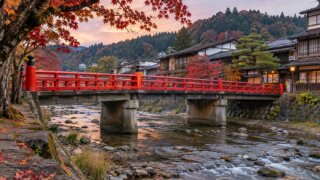










Where is “Hibike! Euphonium” set? The anime is set in Uji, a small city between Kyoto and Nara. The bridge Kumiko crosses, the hill where she and Reina talk at night, the shrine steps, the station platform and the concert hall are all real places, and almost all of them are within a 30-minute walk of Uji Station. From Kyoto Station it takes about 20 minutes by train.
This guide lists 12 real locations with the scene each one appears in, a half-day walking route, a map, and the things that changed for 2026: new opening hours, a bakery that no longer opens early, the correct name of the “Kitauji High School” model, and the Keihan Railway collaboration that is running right now.
- Setting: Uji City, Kyoto Prefecture (around JR Uji Station and Keihan Uji Station)
- Access: About 20 minutes from Kyoto Station on the JR Nara Line (Miyakoji Rapid), about 240 yen
- Time needed: Half a day for the main spots; a full day if you add Taiyogaoka park and the Otsu wrapped train
- The must-see spot: Daikichiyama Observation Deck, the hill where Kumiko and Reina look down on the town
- The real Kitauji High School: Kyoto Prefectural Todo High School, near Obaku Station (a working school – look from the street only)
- Free pilgrimage map: Available at the Uji City Tourist Center and station information desks during the Keihan collaboration (until December 20, 2026)

Contents
Where is Hibike! Euphonium set? Uji in 20 minutes from Kyoto
“Hibike! Euphonium” (Sound! Euphonium) follows Kumiko Oumae and the concert band of Kitauji High School. The school is fictional, but the town around it is drawn closely from Uji, a city of about 180,000 people famous for green tea, Byodo-in Temple and the Tale of Genji. Kyoto Animation, the studio that made the series, has its base in this area, which is why the backgrounds are so exact: the same shop signs, the same bridge railings, the same platform roof.
The TV series ran in 2015, 2016 and 2024, and the story was completed with a two-part film released in 2026. Fans have been coming to Uji for ten years, and the city and Keihan Railway now run official collaborations, so this is one of the easiest anime pilgrimages in Japan for a visitor who does not read Japanese.
Getting there is simple. From Kyoto Station, take the JR Nara Line to JR Uji Station: about 20 minutes on a Miyakoji Rapid train, around 240 yen, and your IC card (Suica, ICOCA, PASMO) works. If you are coming from Osaka or from central Kyoto by Keihan, take the Keihan Main Line to Chushojima and change to the Keihan Uji Line for Keihan Uji Station. The two stations are on opposite sides of the Uji River, about 10 minutes apart on foot, and the whole pilgrimage happens between them.
All 12 locations at a glance
“Said to be” means that fans and local media agree on the model, but the studio has never published an official list. The spots marked ★ are the ones to keep if you only have two or three hours.
| Location | Scene | Access |
|---|---|---|
| ★ Uji Bridge & Asagiri Bridge | The walk home, the festival scenes | JR Uji 5 min / Keihan Uji 2 min |
| ★ Uji River and the riverside path | Opening scenes, practice by the water | Between the two stations |
| ★ Byodo-in Temple & the “Kumiko bench” | The temple in the background; the bench behind it | JR Uji 10 min |
| Uji Shrine & Ujigami Shrine | The shrine visit and the stone steps | Keihan Uji 10 min |
| ★ Daikichiyama Observation Deck | Kumiko and Reina at night, the most famous scene | Climb from beside Uji Shrine, about 20 min |
| Agata Shrine | The Agata Festival episode | JR Uji 10 min |
| Keihan Uji Station | The station and the crossing by Uji Bridge | Keihan Uji Line terminus |
| Obaku Station & Nakaji Bakery | Shuichi’s bread; Hazuki gets off here | Keihan Obaku Station, 1 min |
| Todo High School (Kitauji model) | The school gate and the hill road | Obaku Station, about 15 min uphill |
| Yamashiro General Sports Park (Taiyogaoka) | Outdoor practice and sports day scenes | Bus from Uji Station, 15–25 min |
| Uji City Cultural Center | The concert hall of the competition scenes | Bus from JR Uji, about 10 min |
| Keihan Ishiyama-Sakamoto Line (Otsu) | The wrapped train, not in the story | Day trip from Uji, about 1 hour |
A half-day route through Uji
This is the order that works best on foot. It starts and ends at a station, and it saves the hill for the late afternoon, when the view is at its best.
- JR Uji Station (start): Walk down the main street to Uji Bridge, 5 minutes.
- Uji Bridge → Byodo-in Temple: Cross the bridge, then follow Omotesando street to Byodo-in. Allow 1 hour inside, plus the “Kumiko bench” on the river path behind it.
- Lunch: Tea houses and soba restaurants line Omotesando. Uji is the home of matcha, so matcha soba or a tea-tasting set is the local choice.
- Asagiri Bridge → Uji Shrine → Ujigami Shrine: Cross to the east bank on the orange Asagiri Bridge, 15 minutes of walking in total.
- Daikichiyama Observation Deck: The path starts beside Uji Shrine. About 20 minutes up, 15 minutes down. Come down before sunset.
- Keihan Uji Station (finish): 10 minutes from the foot of the hill. Trains run to Chushojima for Kyoto and Osaka.
If you have a full day, add Obaku Station and the bakery in the morning (it is two stops before Uji on the Keihan line), and Taiyogaoka park or the Uji City Cultural Center in the afternoon.
1. Uji Bridge and Asagiri Bridge

Uji Bridge is first recorded in the year 646 and is one of the oldest bridge sites in Japan. In the anime it is the everyday bridge: the characters cross it on the way home, and it appears in the festival scenes of Episode 8. The small balcony halfway across, called Sanno-ma, is the easiest place to stand for a photo without blocking the pavement.
Fifteen minutes upstream, the vermilion Asagiri Bridge crosses to the island in the middle of the river and on to the east bank. It is the quickest link between Byodo-in and the two shrines, and the view from it – the river, the hills, the pagoda on the island – is the postcard of Uji.

Address: Uji Bridge, Uji, Uji City, Kyoto
Open: Always open, free
Access: 5 minutes on foot from JR Uji Station, 2 minutes from Keihan Uji Station
2. The Uji River and the riverside path

The river runs through the whole series. The promenade on both banks appears from the first episode, and the water pipe bridge (suikankyo) upstream, a plain steel bridge that carries a water main, is a favourite of location hunters because it is drawn so precisely.
The path is free, flat and open all the time, which makes it the best place to start if you arrive with no plan. Cherry trees line it in early April and the maples turn red in late November. The current is strong and there are no fences in places, so stay on the paved path with children.

Address: Along the Uji River, Uji City, Kyoto
Open: Always open, free
Access: 10 minutes on foot from JR Uji Station
3. Byodo-in Temple and the “Kumiko bench”

Byodo-in is a World Heritage temple founded in 1052, and its Phoenix Hall is the building on the 10-yen coin. In the anime it stands in the background of Episode 2 and of many establishing shots, because it is simply what Uji looks like.
Behind the temple, on the river path, is a plain bench that fans call the “Kumiko bench” after the scene where she sits there. It is now marked on Google Maps under that name. It is an ordinary public bench: sit, take your photo, and let the next person have a turn.
Inside the temple, the garden and the Hoshokan museum are included in the admission ticket. Going inside the Phoenix Hall itself costs 300 yen more and works by timed ticket, sold at the desk in the garden from 9:10, with a limited number of people in each 20-minute slot. On busy days the slots sell out by early afternoon, so buy your timed ticket as soon as you enter.

Address: 116 Ujirenge, Uji City, Kyoto
Hours: Garden 8:45–17:30 (last entry 17:15); Hoshokan museum 9:00–17:00; Phoenix Hall interior 9:30–16:10, every 20 minutes
Closed: Open every day
Admission: Adults 700 yen, junior and senior high school students 400 yen, elementary school students 300 yen; Phoenix Hall interior 300 yen extra
Access: 10 minutes on foot from JR Uji Station, 10 minutes from Keihan Uji Station
4. Uji Shrine and Ujigami Shrine

On the east bank, across Asagiri Bridge, two shrines stand five minutes apart. Uji Shrine is at the bottom, with the stone steps and the wooded approach that appear in the shrine scenes of Episode 5. Ujigami Shrine, just above it, is a World Heritage site: its main hall is the oldest surviving shrine building in Japan, built in the late Heian period.
Both are free to enter, and both are quiet even when Byodo-in is crowded. Uji Shrine is also the entrance to the Daikichiyama path, so most people visit the two shrines and the lookout as one walk. The shrine office, where charms and goshuin stamps are sold, is usually open about 9:00–16:30, while the grounds themselves are open during daylight hours.

Address: Uji Shrine: 1 Ujiyamada, Uji City. Ujigami Shrine: 59 Ujiyamada, Uji City
Hours: Grounds open during daylight; shrine office about 9:00–16:30
Admission: Free
Access: 10 minutes on foot from Keihan Uji Station, 20 minutes from JR Uji Station
5. Daikichiyama Observation Deck: the scene fans come for
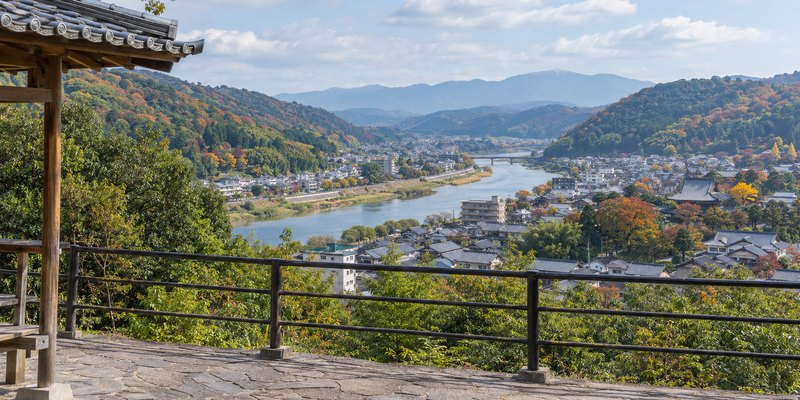
If you only do one thing on this list, do this one. Daikichiyama (officially Mount Buttoku) is the wooded hill behind Uji Shrine, and the lookout at the top is where Kumiko and Reina climb at night in the first season – the scene with the lights of the town below and the trumpet. It is the single most visited spot of this pilgrimage, and the view really is the same: the Uji River, the roofs of the old town and the Phoenix Hall of Byodo-in directly below.
The path starts next to Uji Shrine and is a wide, maintained walking track of about one kilometre, with a wooden shelter halfway up. Allow about 20 minutes up and 15 minutes down in normal shoes. There is no gate, no fee and no shop, so bring water.
In the anime the characters climb at night. Do not copy that. The path has no lighting at all, the surface is uneven, and wild boar and deer live on the hill. Go in daylight, come down before sunset, and keep your voice low near the shrine and the houses at the bottom.
Daikichiyama Park (Uji City, Japanese)
Address: 31-1 Ujikosai, Uji City, Kyoto
Open: Always open, free (daylight hours recommended)
Access: The path begins beside Uji Shrine, 10 minutes on foot from Keihan Uji Station
6. Agata Shrine and the Agata Festival
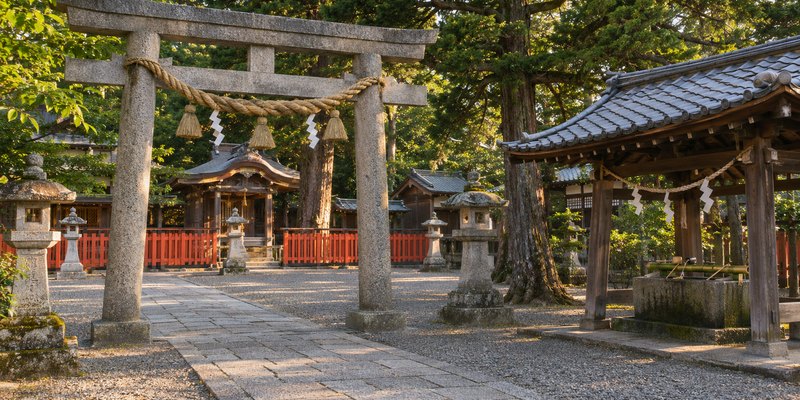
Agata Shrine stands a few minutes south of Byodo-in, and it is the shrine behind the summer festival episode. Its own festival, the Agata Matsuri, is held every year on the night of June 5 into the early hours of June 6, when the street lights along the route are switched off and a large portable shrine called a bonten is carried through the dark. Locals call it “the festival of darkness”.
On any other day it is a small, calm shrine with a long approach, free to visit. In 2026 it is also one of the stamp points of the Keihan digital stamp rally (November 1 to December 20).
Address: 72 Ujirenge, Uji City, Kyoto
Open: Grounds open during daylight, free
Festival: Agata Matsuri, the night of June 5 to the morning of June 6
Access: 10 minutes on foot from JR Uji Station
7. Keihan Uji Station

The terminus of the Keihan Uji Line is a 1995 building with a glass drum roof, and it appears in the series together with the crossing at the east end of Uji Bridge, which shows up often in Episode 12. The area is quieter than the JR side, so it is an easy place to take your time with photos.
During the current collaboration the station also has a life-size character panel and a wrapped vending machine, and the station announcements are read by the characters. The small tourist information desk in front of the station hands out the free pilgrimage map.

Address: Ujiotokata, Uji City, Kyoto
Access: Keihan Uji Line, terminus. From Kyoto, change at Chushojima; from Osaka, change at Chushojima from the Keihan Main Line
8. Obaku Station and Nakaji Bakery

Two stops north of Uji, Obaku Station is where Hazuki gets off after school in Episode 5. The platform, the signs and the view of the tracks match the anime almost exactly, and the station is also the gateway to Manpuku-ji, a large Chinese-style Zen temple worth half an hour if you have time.

The bread Shuichi carries is said to be the “Frank Danish” from Nakaji Bakery (Nakaji Bakery, written 中路ベーカリー), a tiny neighbourhood bakery less than a minute from the station exit. Its hours have changed: it now opens 8:00–19:00 and closes on Tuesdays and Sundays, not the early morning hours listed in older guides. There are six counter seats, prices are under 1,000 yen, and popular items sell out in the afternoon.

Address: 17 Nishiura, Gokasho, Uji City, Kyoto
Hours: 8:00–19:00
Closed: Tuesdays and Sundays
Access: 1 minute on foot from Keihan Obaku Station; JR Obaku Station is also nearby
9. The real Kitauji High School: Todo High School

Kitauji High School does not exist, but the school on the hillside above Obaku does. The model is Kyoto Prefectural Todo High School – the name on the stone plaque by the gate in the photo above – and not the similarly named Uji High School, which older guides (including an earlier version of this article) got wrong. Fans also point to Higashi-Uji High School for a few interior shots, but the gate, the slope and the tree line are Todo.
The walk up from Obaku Station takes about 15 minutes and is steep – the same hill the characters complain about. Cherry trees bloom at the gate from late March to early April, the season of the entrance ceremony in Episode 1.

This is a working school with students in it every weekday. Do not enter the grounds, do not photograph students, and do not stand in the gateway. Take your photo from the public road, keep your voice down, and move on. Visiting at a weekend is kinder to everyone.
Address: Gokasho, Uji City, Kyoto (Kyoto Prefectural Todo High School)
Open: Exterior only, from the public road
Access: About 15 minutes uphill from Keihan or JR Obaku Station
10. Yamashiro General Sports Park (Taiyogaoka)

Known to everyone as Taiyogaoka, this prefectural park on the hills south of the city has the athletics stadium, pool, gymnasium and tennis courts that appear in the outdoor practice scenes. It is a real sports park, busy with local clubs at weekends, and you can walk in freely.
For fans there is a concrete reason to come: since August 2026 the park sells Hibike! Euphonium location stickers for 200 yen each (Kumiko, Reina, Midori and Hazuki) at the gymnasium reception – you buy a token from the vending machine and exchange it – and a location panel stands in front of the gymnasium.
The park is not closed on Mondays, as older guides say. It closes only for the new year holidays, with facility maintenance days on Thursdays from November to June (except public holidays).

Taiyogaoka / Yamashiro General Sports Park (official, Japanese)
Address: 1 Hachikenyadani, Hirono-cho, Uji City, Kyoto
Gates: Pedestrians 5:00–22:00, vehicles 7:00–22:00
Closed: New year holidays; maintenance on Thursdays from November to June (except holidays)
Entry: Free; parking 500 yen per car
Access: Bus bound for Taiyogaoka from JR or Keihan Uji Station, 15–25 minutes (weekends and holidays only); on other days take a bus to Taiyogaoka Gate-mae and walk 10 minutes
11. Uji City Cultural Center

The hall where the band plays its competition, and where the final episode of the first season reaches its climax, is the Uji City Cultural Center, a public hall with a 1,308-seat main auditorium. The entrance, the foyer and even the car park at the back are drawn from the real building.
It is a working concert hall, not a museum: you can look at the outside and the lobby freely, but to see the auditorium you need a ticket for a concert. The schedule is on the official site, and local school bands really do perform here.

Uji City Cultural Center (official, Japanese)
Address: 1-1 Oriidai, Uji City, Kyoto
Closed: Mondays and the new year holidays
Phone: 0774-39-9333
Access: About 10 minutes by bus from JR Uji Station or Keihan Uji Station; about 25 minutes on foot from JR Uji Station
12. The wrapped train on the Otsu line

This one is not in the story, but it is the easiest “character” you can actually ride. Keihan runs a fully wrapped Euphonium train on the Ishiyama-Sakamoto Line in Otsu, Shiga Prefecture, next to Lake Biwa – two cars painted with the band, with character announcements inside. The current wrapped train runs until March 31, 2027, on the section between Ishiyamadera and Sakamoto-Hieizanguchi.
From Uji it is about an hour: JR Nara Line to Kyoto, JR Biwako Line to Otsu, then the Keihan Otsu line. Kawaguchi Park, where the track runs at street level, is a classic photo spot and is lovely in cherry blossom season. The train runs on a published schedule that changes every month, so check the operation calendar on the Keihan site before you travel.

Keihan Railway x Hibike! Euphonium (official, Japanese)
Running: September 1, 2026 – March 31, 2027
Section: Ishiyama-Sakamoto Line, between Ishiyamadera and Sakamoto-Hieizanguchi
Train: Series 700, cars 705–706 (schedule published monthly)
What is on right now: the Keihan collaboration (autumn 2026)
Keihan Railway and the city of Uji run a collaboration with the series almost every year, and the current one, “Keihan Railway x Hibike! Euphonium 2026 Autumn”, runs until December 20, 2026. If you are in Uji before that date, these are free or cheap and easy to join even with no Japanese:
- Free location map: A printed pilgrimage map made with the city, handed out at major Keihan stations, the Uji City Tourist Center, the information desk in front of Keihan Uji Station and Yumeria Uji by JR Uji Station, while stocks last.
- Digital stamp rally: Walk to the stamp points and collect them on your phone. The autumn course, from November 1 to December 20, is the Uji River bank (water pipe bridge), Agata Shrine and Kohata Shrine; the earlier course used Uji Bridge and the Daikichiyama lookout. Completing a course unlocks a character photo frame.
- Character stations: Life-size panels at Uji and Chushojima stations, character station announcements on the Uji Line, and wrapped vending machines at Uji (Kumiko), Mimurodo (Midori), Obaku (Hazuki) and Rokujizo (Reina) stations.
- Collaboration free ticket: 1,700 yen for one day of unlimited travel on the Keihan Line, with a collector’s card, sold at Yodoyabashi, Kyobashi, Hirakatashi, Chushojima, Tambabashi and Sanjo stations until March 31, 2027 (6,000 issued). A separate Otsu Line version is sold at Biwako-Hamaotsu.
- Collaboration Festa: Uji City and Keihan hold a one-day collaboration event on December 19, 2026.
Collaborations change every year, so check the official page above for the current dates before you plan your trip around them.
Manners for this pilgrimage
- Schools: Todo High School is in use. Photograph from the road, never the students, and never enter.
- Shrines and temples: Byodo-in, Uji Shrine and Ujigami Shrine are places of worship. Follow the photography signs, and do not use a tripod on the approach.
- The hill at night: Daikichiyama has no lights. Do not recreate the night scene.
- Residential streets: The riverside and the roads around Obaku are where people live. Keep your voice down, especially in the evening.
- Shops: Buy something before you photograph inside, and ask the staff first.
Map of Hibike! Euphonium locations in Uji
Questions people often ask
Where is Hibike! Euphonium set in real life?
In Uji City, Kyoto Prefecture, mainly between JR Uji Station and Keihan Uji Station. Uji Bridge, Byodo-in Temple, Uji Shrine, the Daikichiyama lookout, Obaku Station and the Uji City Cultural Center are all real.
Is Kitauji High School a real school?
The name is fictional. The building and the gate are modelled on Kyoto Prefectural Todo High School, on the hill above Obaku Station. It is a working school, so you can only look from the public road.
How long does the pilgrimage take?
Half a day covers the bridges, Byodo-in, the two shrines and the Daikichiyama lookout on foot. Add half a day for Obaku, Taiyogaoka park and the Cultural Center, or a full extra day for the wrapped train in Otsu.
Where can I get the pilgrimage map?
During the Keihan collaboration (until December 20, 2026) the printed map is free at the Uji City Tourist Center near Uji Bridge, at the tourist desk in front of Keihan Uji Station, at Yumeria Uji by JR Uji Station and at major Keihan stations. The Uji City Tourist Center is open 9:00–17:00.
When is the best time of year to go?
Late March to early April for the cherry blossoms at the school gate and along the river, or late November for the maples. June 5 is the night of the Agata Festival at Agata Shrine.
Other anime pilgrimage guides


Summary
Uji is the easiest anime pilgrimage you can do from Kyoto: 20 minutes on the train, and almost every location within walking distance of the river. Start at Uji Bridge, see Byodo-in and the Kumiko bench, cross to Uji Shrine, and climb Daikichiyama in the afternoon for the view from the famous night scene. Add Obaku Station and the bakery if you have a full day, and if you are here before December 20, 2026, pick up the free map and join the stamp rally.
The information in this article was checked in November 2026. Opening hours and collaboration dates change, so check the official pages before you go.